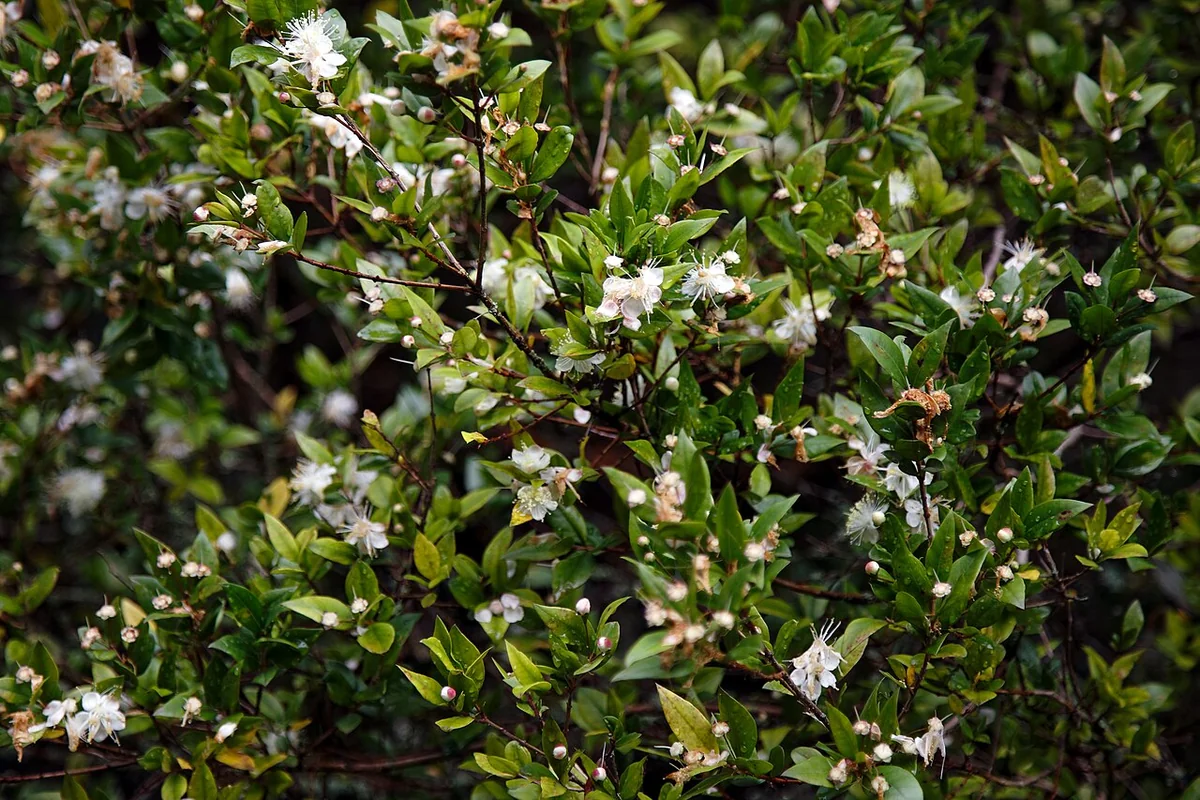
Myrtle's small leaves reward close attention
Common myrtle can make an elegant container tree through its small aromatic evergreen leaves, fine branching and white flowers with conspicuous stamens. Myrtus communis is a good subject for a bright sheltered conservatory or a carefully managed seasonal indoor arrangement. It is not a substitute for a shade tolerant office tree. The very fineness of the foliage can disguise how much light and moisture the crown uses. Choose a plant whose framework can be inspected, not simply the most tightly clipped ball in the shop, and decide where it will spend both the active growing season and winter.
The species is native around the Mediterranean region and adjoining areas, and cultivation has produced compact and differently shaped forms. A plant described as dwarf myrtle should retain its more precise cultivar label if available. Myrtle is not the same as every shrub carrying myrtle in its common name, so botanical identification prevents a misleading comparison of care or edible use. A specimen trained as a standard also represents nursery work that will need to be maintained. The stem does not automatically remain in perfect proportion to a spherical crown as branches extend and the root ball develops.
Brightness, airflow and seasonal shelter
Give the crown strong daylight with sun suited to the local conditions. A sheltered outdoor growing season can be useful, provided a protected plant is acclimated gradually to stronger exposure. Keep air moving around the fine branches rather than enclosing them among many larger pots. A sunny conservatory can become very hot at midday, so the position must be assessed for heat as well as light. The lower canopy should not be permanently shaded by its decorative container or surrounding furniture. Compact growth is easier to maintain when the whole branching outline receives useful light.
Myrtle generally needs a different winter arrangement from a warm tropical foliage collection. A bright cool sheltered place may be more suitable than a hot dim living room, while severe frost can damage an exposed container specimen. Check the requirements of the actual selection and local conditions. Pot walls leave roots more vulnerable to temperature changes than they are in the ground. Keep outlets clear and avoid a saucer filling repeatedly with cold rain. An evergreen plant still requires occasional moisture checks during a quiet season; reduced growth should mean adjusted care, not complete abandonment until spring.
Root moisture beneath the clipped crown
Use a fertile open container mix with enough structure to support a small woody tree. The pot should be stable beneath the crown and should increase sensibly in size when the roots need more space. Maintain the existing collar level rather than burying the stem to conceal a nursery mark. A sealed decorative sleeve can be used only if runoff is removed after watering. Before repotting a tired looking tree, inspect whether the real problem is a dry nursery root ball, a wet lower layer or insufficient light. A larger pot does not automatically correct any of those conditions.
Check the occupied roots before choosing when to water. A small standard with many leaves can use moisture rapidly during warm sunny weather, even though its sales label may mention the Mediterranean. Water thoroughly when replenishment is needed and let excess escape. Repeated complete drying can injure fine growth, while keeping a cold root ball permanently saturated is equally unsatisfactory. Learn the pot's weight as well as feeling the mix. If the plant is kept in a shared space, leave a clear record of the last watering so several helpful people do not all add water to the same already wet container.
Flowers require growth that is allowed to mature
Myrtle's white flowers can be one of its most appealing features, but constant clipping can remove the growth that would carry the display. Decide whether the primary aim is formal topiary or a looser flowering tree and prune accordingly. Remove damaged growth and shorten selected stems with the overall framework in mind. Let enough useful foliage remain after shaping. A plant can be attractive in its natural shrubby outline without being forced into a perfect sphere. Small dark fruits may follow pollination, but they should be treated as ornamental unless identity, treatment history and intended use have been properly established.
Feed while the plant is growing with an appropriate container fertilizer at its recommended rate. Account for nutrition included in new medium and avoid overfeeding simply because a clipped crown has not produced flowers. The missing factor may be light or repeated removal of buds rather than a shortage of food. Inspect the pattern of any pale leaves and the moisture within the roots before adding extra supplements. A firm balanced branch structure is more valuable than a flush of soft shoots that immediately needs cutting back to keep the tree inside its available space.
Make inspections part of maintenance
Look inside the canopy and underneath leaves when checking for scale or other pests. A dense formal head can conceal an issue long before its outer appearance changes. If leaves dry or drop after moving the plant, review the difference in root moisture, heat and exposure instead of treating all leaf fall as the same problem. Gentle cleaning and the removal of dead debris make inspection easier. Do not polish the foliage with oily products merely for a brighter finish. Before returning a summer pot indoors, keep it apart briefly while its condition is checked in a place with good visibility.
Myrtle has a documented association with marriage in particular traditions. British royal wedding records, for example, describe myrtle in bridal bouquets and a connection with plants at Osborne House. This is a specific historical practice, not evidence that every community uses the plant in the same way. It may provide a thoughtful reference for a wedding or anniversary present if the recipient welcomes that association. The gift should not claim that the plant protects a marriage or guarantees affection. Its practical suitability still depends on light, seasonal shelter and the recipient's willingness to maintain a living woody plant.
A present that can be cared for
Ask about the future growing position before choosing a large trained myrtle. A smaller plant in an accessible draining pot may be easier to establish than an impressive standard that cannot be moved safely. Give the exact name, the nursery care history and an explanation of its seasonal needs. Do not suggest eating leaves or fruit from a decorative retail plant without checking its intended use. The most lasting wedding or housewarming message can be simple and personal: this is a tree to tend over time, with its fine branches and later flowers developing through care rather than through promises attached to its name.