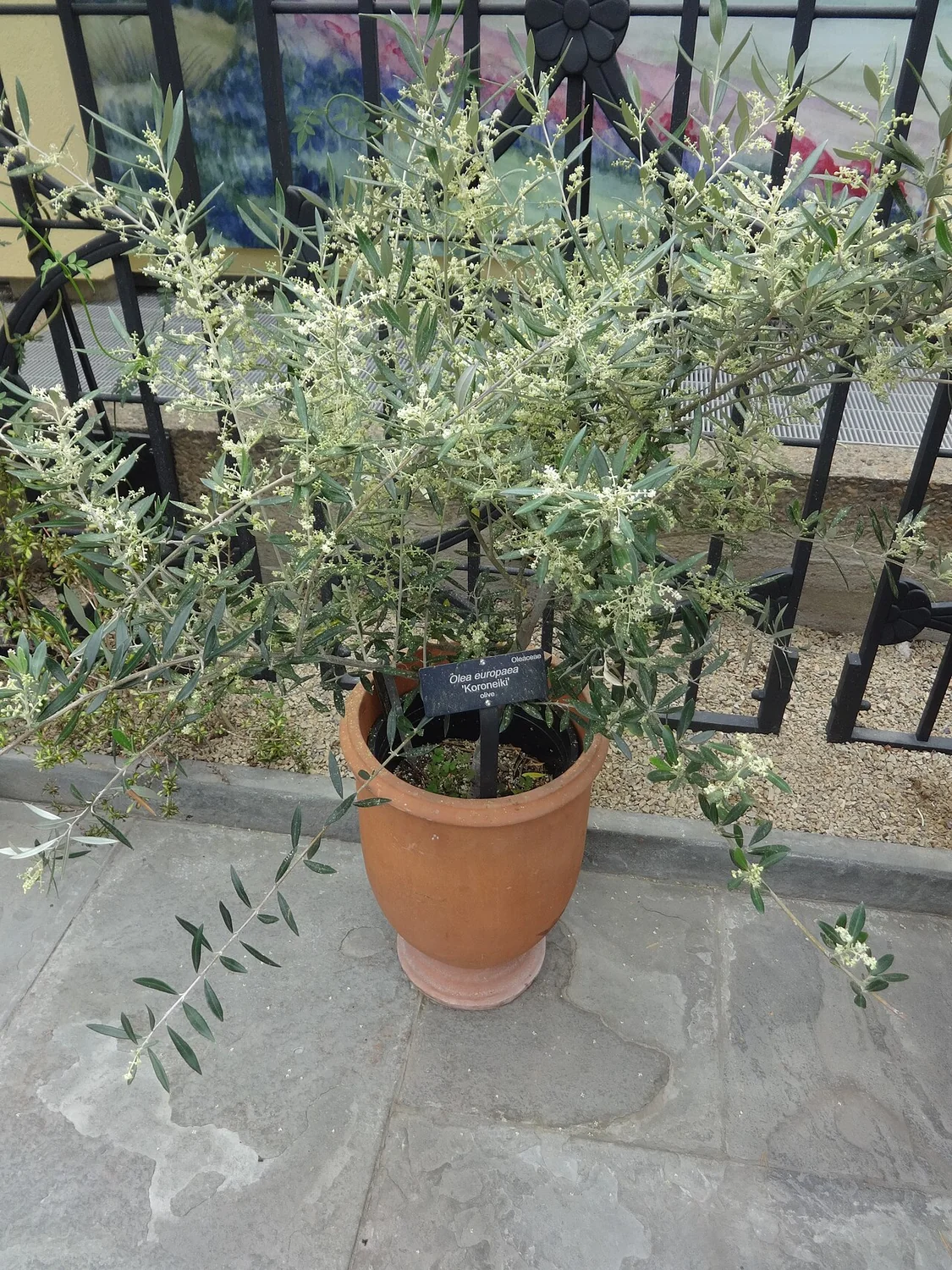
An olive needs its Mediterranean light
An olive tree has a distinctive way of bringing a garden into a room: narrow leaves show a pale underside as the branches move, and an older trunk can have considerable character without a dense canopy. Olea europaea should nevertheless be regarded as a sunny conservatory or seasonal display tree rather than a dependable plant for a dim office. The floor space available is only part of the decision. A tree that fits beside a chair but cannot receive adequate light there will gradually lose the very outline that made it attractive in the first place.
The species is closely associated with the Mediterranean region and neighbouring areas, where cultivation has shaped landscapes and selected many distinct fruiting varieties. A commercial olive name can identify a cultivar with its own growth and pollination characteristics. The old appearance of a nursery trunk does not prove an ancient provenance, nor does it make the specimen naturally adapted to indoor life. Ask how it was grown and whether the tree is intended mainly for ornamental foliage or a possible crop. A container restricts the root space; it does not erase the environmental needs of a woody tree.
Sunny summers and appropriate winter shelter
Give the crown abundant sunlight and room for air to move between the branches. An outdoor summer position is often preferable where the climate allows, with gradual acclimation after time behind glass. Avoid a sheltered corner that is actually shaded most of the day. A conservatory can provide winter protection, but it should remain bright and should not trap the tree in hot stagnant air. Check conditions around the root container rather than relying on a distant thermostat. The goal is suitable seasonal protection, not the same continuously warm conditions used for a tropical foliage plant.
A cool season has practical significance, particularly when flowering is part of the aim. Do not promise a crop from an olive kept permanently in an evenly heated living room. Cultivar, seasonal temperatures, pollination and the growing position all affect the outcome. In cold regions, exposed container roots need more protection than roots growing in the ground. Keep drainage functioning during winter and shield the pot from severe freezing as appropriate to local conditions. Moving the tree briefly indoors for an event is different from making a dark heated room its permanent winter home.
A tub that drains after the rain
Choose a stable container and an open mix suited to a woody plant that dislikes prolonged root saturation. Keep the original collar level and avoid burying the trunk in decorative material. A heavy upper framework deserves a pot that cannot topple when someone brushes past it. Repot in response to root development and the condition of the medium rather than making an automatic annual jump in size. The drainage holes must remain clear, especially on an outdoor pot exposed to repeated rain. A sealed outer planter can turn an otherwise well drained setup into a hidden reservoir.
An established olive's reputation for drought tolerance does not mean that a small pot can be ignored through a hot windy week. Inspect the occupied root zone and water thoroughly when it needs replenishment, allowing a useful drying interval afterward. Cooler conditions generally lengthen that interval. Leaves becoming less firm over dry mix require a different response from decline above a cold wet root ball. Check the actual situation before adding water. If several people share care in an office conservatory, assign responsibility clearly so the tree is not repeatedly watered by everyone who notices its silver foliage.
Maintain a tree rather than a clipped ornament
Keep enough leaf area to support the framework. Remove damaged or crossing growth and shape selected branches deliberately instead of continually shearing the entire outside. An open crown lets light reach more shoots and gives access for inspection. A trained standard needs regular checks where a tie touches the trunk, while a naturally branching tree may need no permanent stake after establishment. Large structural work should have a clear purpose. If repeated severe reductions are needed just to fit the available room, a smaller specimen or a different tree may be a more appropriate long term choice.
Feed moderately during useful growth with a suitable container fertilizer, following its instructions and allowing for nutrients already present in fresh medium. More food cannot replace missing sunlight or a seasonal temperature pattern required for flowering. A young ornamental specimen need not carry a crop to be successful. If fruits develop, recognise that cultivated olives are not generally eaten straight from the tree in the same way as ripe dessert fruit. The work of identifying and processing a crop is separate from maintaining an indoor display. Never encourage tasting fruit on an ornamental retail plant without knowing its treatment history.
Read changes in the leaves carefully
An olive naturally combines green upper leaf surfaces with paler undersides, so a silver appearance should not automatically be called a deficiency. Look for a new pattern of yellowing, leaf loss or sticky residue and compare it with the tree's recent conditions. Scale insects can hide on stems and require close observation. A wet pot and a shaded position should be investigated before supplements are added. When moving a tree inside, examine it separately from other plants first. Keeping notes about the seasonal position and watering helps distinguish a temporary adjustment from an accumulating root problem.
The olive branch has a documented association with peace, including its use in the United Nations emblem. That provides a specific cultural reference for a gift without implying that a potted tree can guarantee harmony or resolve a relationship. A retirement, anniversary or new home gift may draw on that association if the recipient welcomes it. The horticultural fit still comes first. A person with a bright sheltered terrace and suitable winter protection has a different opportunity from someone whose only possible display position is a windowless meeting room.
A practical gift with a realistic future
Ask about the recipient's ability to move a heavy tub and provide appropriate seasonal conditions. Include the nursery identity, intended use and a clear explanation that ordinary indoor shade is not suitable. A modest tree with a movable draining pot may be more generous than a large sculptural trunk that nobody can handle. Do not invent an age or origin story for an attractive specimen. Its real future is enough: a well lit framework, a root system that can drain, and a growing routine that suits the place. Those conditions preserve its character far better than decorative promises attached to the label.