Spring pruning can leave a tempting pile of stems on the table, yet not every piece is suitable for a new plant. Planning propagation before making the first cut lets you preserve the right nodes, choose manageable pieces, and prepare a place for them to root. Start with the parent plants and your actual growing space. A few carefully chosen cuttings are easier to observe than a crowded collection of jars and pots that already exceeds the available light. The aim is useful new plants and a sensible shape for the originals. Those goals can guide each cut, keeping propagation connected to ordinary care rather than turning every removed leaf into an obligation.
Identify each plant and select the appropriate method. Pothos and many philodendrons can grow from stem sections with viable nodes, while a peace lily is usually divided into rooted crowns. Aloe offsets and fern spores are different projects again. Do not assume one method works across all foliage plants. Check reliable horticultural guidance for unfamiliar species before cutting valuable material. Look at the parent's condition as well. A firm actively growing plant is a better source than one struggling with wet roots or an unexplained decline. Correct the basic conditions first when necessary. Propagation should not be used automatically as a substitute for understanding why the original plant is having difficulty.
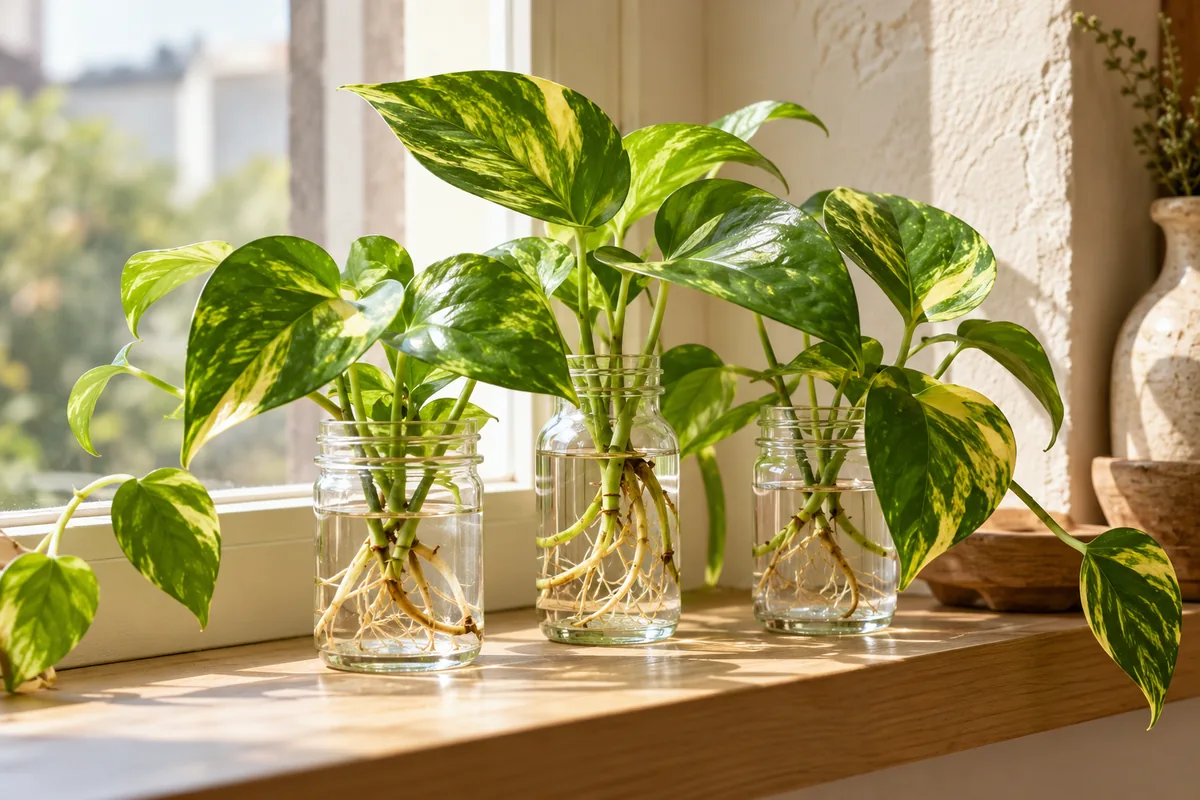
Estimate how many new plants you can accommodate after rooting. Small cuttings eventually need light, watering access, and room for leaves. A crowded sunny windowsill may not be suitable for newly prepared pieces that need gentler exposure. Choose a stable rooting position with bright indirect light and appropriate warmth. Keep covered containers out of direct sun, where they can overheat quickly. Think about the next stage too: water rooted cuttings will need pots, while divisions need containers immediately. Planning the full route prevents a successful rooting stage from becoming a problem later when a jar is packed with roots and there is no suitable pot or space ready for transfer.
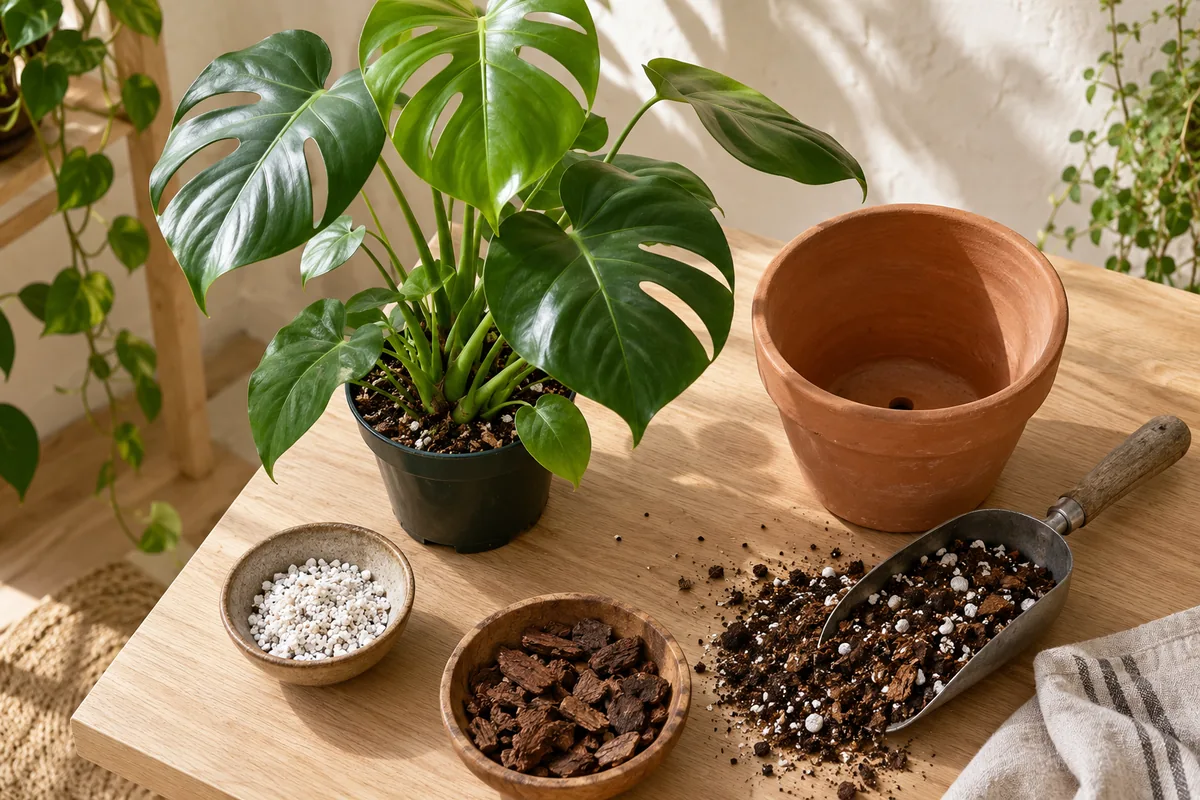
Prepare clean sharp tools, labels, and containers before separating any material. Use a fresh suitable rooting medium where the method requires it, moistening it in advance so the texture is even. Check drainage holes and choose small pots matched to the pieces rather than containers intended for mature plants. A clean narrow vessel can support a water cutting, provided its opening allows later root removal. Put the plant name and date on the label while your hands are still dry. Set aside a place for discarded leaves and keep prepared cuttings on a clean tray. That simple organization helps you work deliberately without confusing similar stems once they are no longer attached to their parent.
Plan each cut around the structures the new plant and the parent need. Trace leaves to the main stem, identify nodes and buds, and keep the orientation of middle sections clear. Retain a modest canopy on an unrooted cutting and remove lower leaves only where they would be buried or submerged. Do not strip every piece to the same length regardless of its structure. On the parent, choose cuts that preserve an acceptable shape and leave useful growth. A few deliberate pieces are often better than dividing every available vine into tiny sections. Keep fragile new spring growth intact when older firm material provides a more practical cutting.
Match moisture management to the method from the beginning. Many leafy stem cuttings need a lightly moist airy medium and reduced moisture loss, while some succulent pieces require their wounds to dry before planting. A clear cover can help certain leafy cuttings in a dry room, but it needs ventilation and protection from direct sun. Water vessels need fresh water and clean stems with leaves above the surface. Do not combine all these methods into one universal setup. Labeling the intended method and the first check date can help when several types are prepared in the same session. The practical care differences matter more than making every container look uniform on the shelf.
Leave enough time after preparation to inspect the cuttings regularly without disturbing them. Check the medium, water clarity, stem firmness, and position. Avoid pulling pieces up repeatedly to look for roots. Record visible changes and remove failed material when needed. A rooting date is not guaranteed by the season, and some species or stems take much longer than others. Do not feed unrooted cuttings heavily to hurry the process. Keep the environment suitable and evaluate each piece from its condition. If you will be away soon, postpone a large batch rather than starting a project that requires unfamiliar care at the same time you cannot be present to assess it.
Review the results after the cuttings establish. Note which parent, stem maturity, method, and position produced manageable new plants. Keep the observations tied to the species so one easy pothos does not become a rule for an unrelated fern or succulent. The record will make the next spring session smaller and more purposeful, with fewer uncertain pieces and better prepared containers. Propagation can be a natural part of shaping and refreshing an indoor collection when its scale fits the room and the care you can provide. Planning first allows the actual cutting to be the simplest part of a process already supported by suitable light, materials, and expectations.