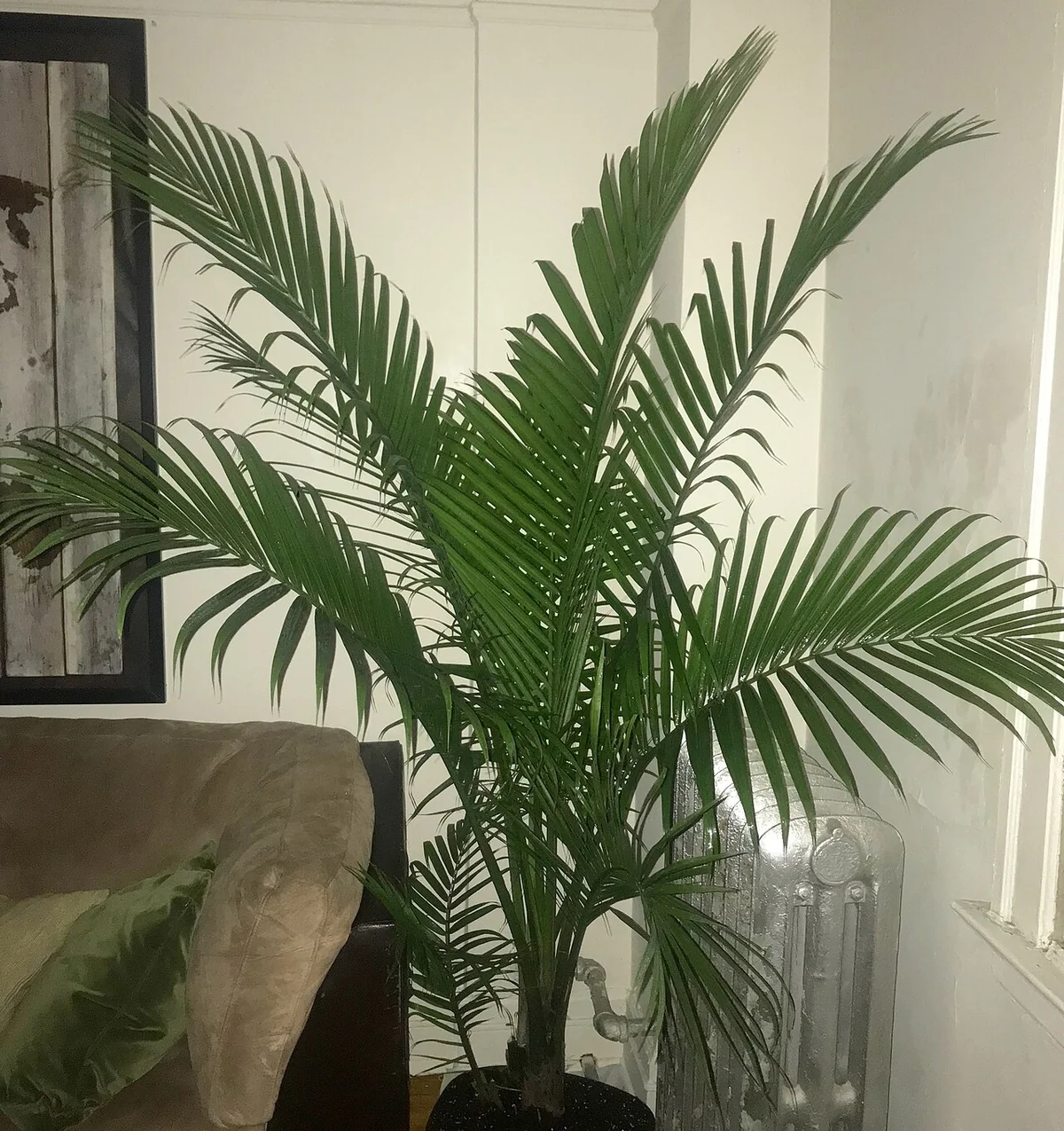
A River-Associated Palm with Real Demands
Majesty palm is often presented as an instant indoor tree because young plants carry a generous canopy at an accessible size. Ravenea rivularis can look magnificent on the day it arrives, with long feathered leaves rising in an upright fountain. That first impression should not be confused with evidence that it will thrive in any office. Among common palms sold for interiors, it asks for a relatively bright, humid, consistently managed environment. The most useful buying decision is therefore an honest assessment of the available room. A low price and a large nursery canopy do not reduce the conditions the living plant requires.
The species is native to Madagascar and associated with river and stream environments. Its name rivularis points toward that water-related habitat. In nature it becomes a substantial solitary palm, far larger than a temporary living-room specimen. Several visible stems in a shop pot may be multiple young plants assembled for fullness rather than natural basal branching. Native habitat helps explain its preference for a dependable moisture supply, but riverbank conditions include drainage and oxygen that a stagnant cover pot lacks. Translating the habitat into cultivation requires attention to the roots, rather than simply giving the plant a permanent pool of water.
Finding a Suitable Bright Interior
The strongest indoor candidates are bright conservatories, large glazed rooms, or carefully managed interiors with suitable plant lighting. Filtered daylight should reach the canopy for much of the day. A shaded reception corner with only ordinary ceiling fixtures is unlikely to sustain the same frond quality. Acclimate a nursery-grown palm before increasing direct sun, since existing leaves may scorch after a sudden change. Consider the spread of a new frond as it opens, not only the compact bundle it makes when tied for transport. An unsuitable low ceiling cannot be corrected by cutting off the crown later.
Keep the root ball evenly supplied during active growth. The upper surface may begin drying, but repeated complete drought followed by soaking is a poor match for this palm. At the same time, examine the bottom of the container after watering to ensure surplus is not trapped. A heavy pot that stays damp for days needs a different response from a bright, actively growing plant whose roots use moisture rapidly. Water slowly enough to wet the central mass, especially if an old nursery mix has become difficult to rehydrate. Do not judge success merely by water running past the roots and out of the holes.
Roots, Humidity, and Replacement Fronds
Provide a medium with both moisture retention and durable air spaces. A richly organic but compressed wet mixture can suffocate roots, while an extremely coarse, rapidly drying mix may be hard to manage in dry indoor air. Match the container to the existing root system and keep a moderate margin for growth. During repotting, preserve the planting depth and avoid aggressively dismantling a sound young root ball. A tall decorative planter should contain an accessible draining pot, not conceal a planting whose bottom can never be checked. Consistent moisture is achievable only when the root environment remains understandable.
Air conditions are part of the commitment. Majesty palm can suffer where heating or air-conditioning continually dries the canopy. If humidity is raised, use a method appropriate to the whole space and avoid directing wet mist at electrical equipment or leaving surrounding surfaces constantly damp. Ventilation should remain gentle rather than absent. A cooler night beside glass and a hot daytime vent can create a sequence of stresses even when the room's average temperature seems acceptable. Look at the actual microclimate around the leaves and pot instead of relying entirely on the setting displayed on a distant thermostat.
A Demanding Canopy Needs Diagnosis before More Feed
Nutrition should be supplied thoughtfully during growth, using a product appropriate for container palms and following its label. A large canopy can show deficiencies when roots and feeding are inadequate, but yellowing does not identify the missing nutrient by itself. Root damage, low light, and overwatering can also disrupt nutrient uptake. Investigate the sequence of changes before adding multiple supplements. Keep older partially green fronds while they remain useful. Cutting away much of a troubled canopy does not restore root function and can leave a slow indoor specimen with very little leaf area to support recovery.
Mites can become a persistent challenge on the fine leaflets in dry rooms. Inspect regularly for early stippling and webbing rather than waiting until a whole frond loses color. Scale and other sap-feeding pests also warrant a close look at the sheltered bases. Isolate affected plants and identify the issue before choosing a treatment. During routine cleaning, support fronds so that the central stems are not bent sharply. Fully dead lower fronds can be removed carefully, but never shorten the central spear or cut living trunks to fit the palm beneath an obstruction. Solitary palm growth does not respond like a branching indoor tree.
Choosing Majesty with Realistic Expectations
The word majesty makes a tempting ceremonial gift message, yet the species is not an easy default for an unknown recipient. It suits an enthusiast with a bright humid space or an office that already maintains larger plants successfully. Its form can personally represent aspiration or a substantial new beginning, while the gift note should explain the real commitment rather than promise effortless grandeur. Ask before sending a large plant. If the recipient travels often, discuss a caretaker. A more forgiving species may be a kinder gift when the only available location is an ordinary dry, shaded living room.
Evaluate this palm over a complete cycle of new frond production, not solely the persistence of the original nursery leaves. Sound emerging foliage suggests that light, roots, water, and air conditions are working together. A continuing loss of new leaves indicates that the site deserves reassessment, even if occasional treatments temporarily improve appearance. Keep the container movable enough to inspect drainage and allow room for future height. Ravenea rivularis can reward committed indoor cultivation, but its appeal is best respected through realistic selection. It is a demanding river-associated palm, not a universal substitute for every empty corner that needs something tall and green.