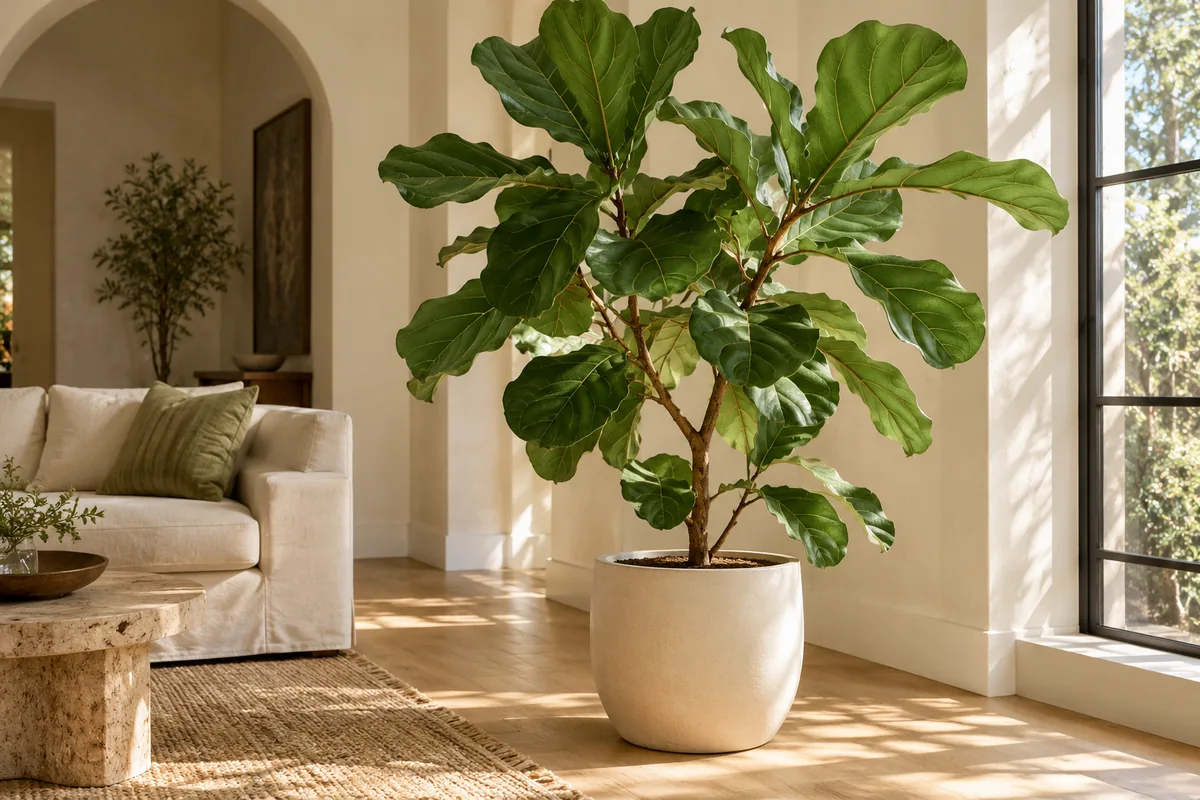
A fiddle leaf fig can fill a room with broad leaves long before its roots need another pot. That difference between the visible canopy and the hidden root ball makes it worth checking carefully before a repot. A larger container will not correct every falling leaf or pale patch. Changes in light, moisture, and temperature can produce similar visible responses. Begin by looking at the current mix and the root space, then decide whether the plant needs a modest increase, a refresh in the same pot, or attention to its position. Optional repotting is easier when the plant is already growing steadily rather than adjusting to a recent move.
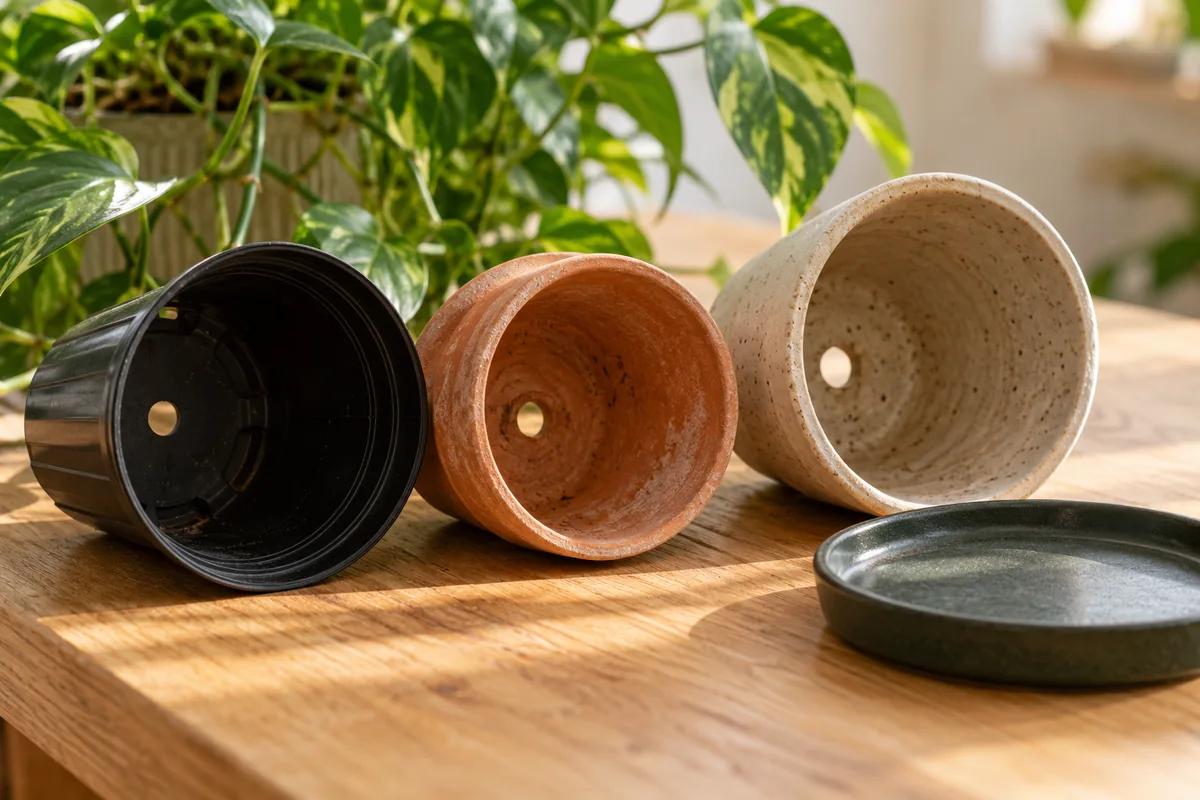
Choose a work area where the leaves have room and the pot can be supported safely. A tall specimen may need another person's help to prevent the trunk and canopy from being bent while the container is removed. Wear gloves when handling damaged roots or stems, since the plant produces milky sap. Gather a clean drained pot, suitable houseplant mix, and a stable support if the trunk already needs one. Compare the new container with the root ball rather than choosing by the tree's height. A heavy outer planter can provide balance while an inner pot remains small enough for the roots to use its moisture at a reasonable pace.
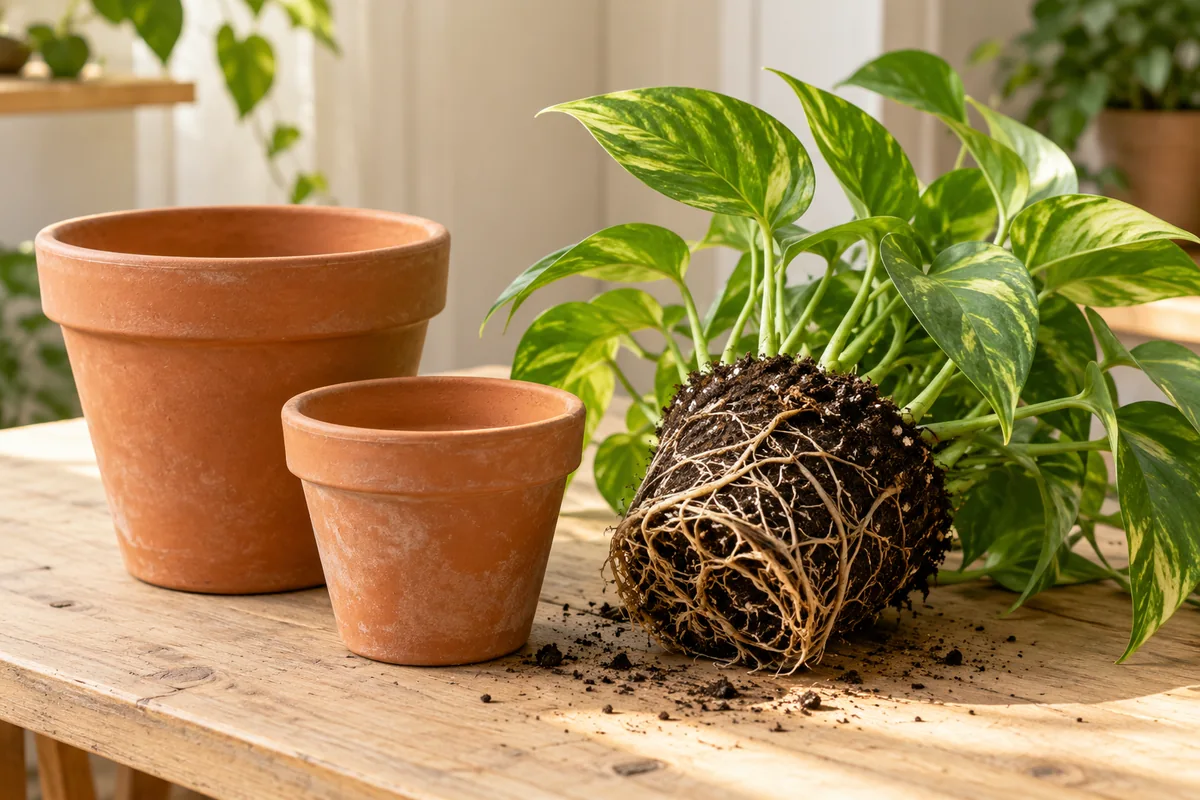
Inspect the root ball with minimal disturbance. Roots densely circling the outside, very little remaining mix, and a container that dries unusually quickly can indicate crowding. Roots reaching one drainage hole alone do not prove that every part of the pot is full. If the root ball remains mostly loose mix, a large size increase is unlikely to help. Remove only material that falls away readily and examine the condition of the outer roots. Firm roots can be various shades of tan or brown depending on the medium. Soft deteriorated sections deserve attention, but stripping and washing every root is unnecessary for a straightforward move into fresh growing space.
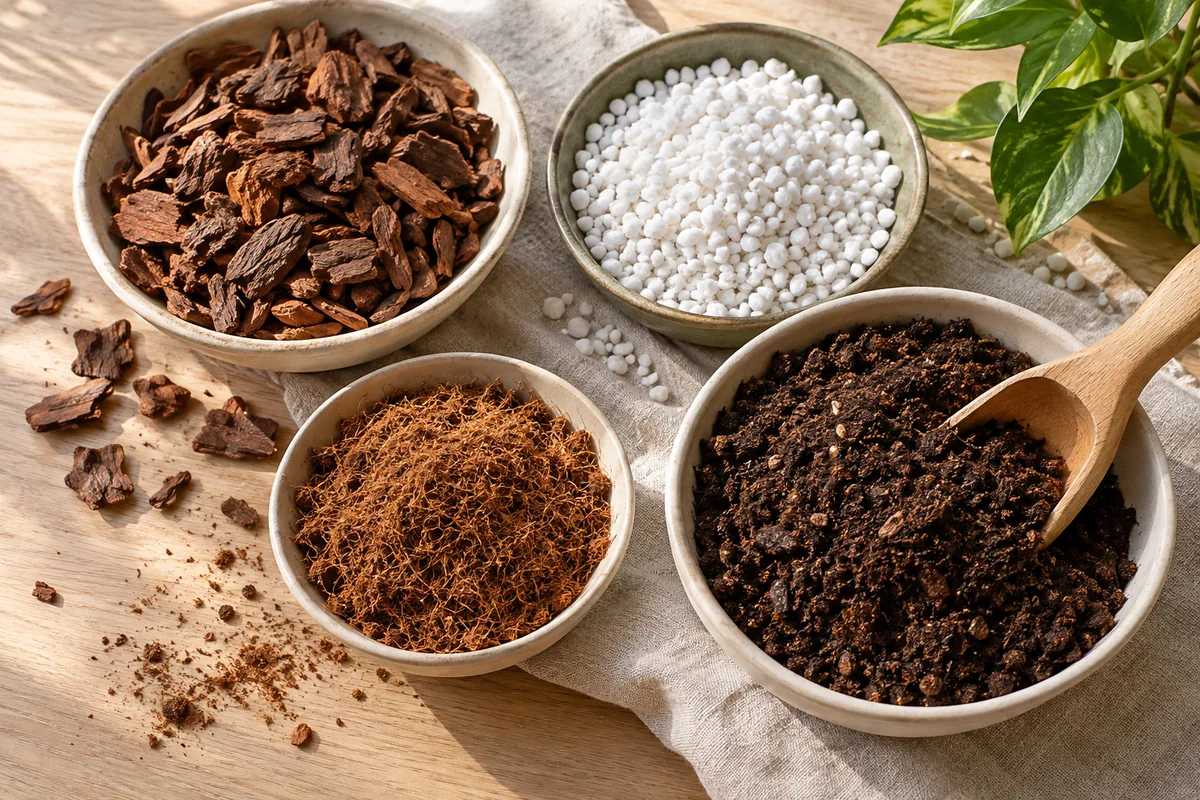
Use a well structured medium that holds useful moisture while allowing drainage and air around the roots. The exact blend should suit the room and watering method. A very fine mix in a large pot can stay damp longer than the tree can use, while an extremely coarse blend may require attention too frequently in warm bright conditions. Lightly moisten a suitable dry mix before use when appropriate. Place enough beneath the root ball to keep the original surface at its former depth below the rim. Do not bury the trunk base. Add the sides gradually and settle the medium gently rather than pressing hard to hold the tree upright.
If support is necessary, place it thoughtfully around the existing root mass. Avoid driving a thick stake through the center simply because the plant leans after handling. Soft ties should support the trunk without rubbing tightly or restricting future growth. A tree leaning toward a distant window also needs its light arrangement reconsidered; a stake cannot replace an appropriate exposure. Keep individual leaf stalks free and allow room for the canopy to face the light. If the old support is firmly integrated with roots, preserve it where practical rather than tearing the root ball to replace an item that still performs its job.
For a tree with largely intact roots, an appropriate thorough watering helps settle the new medium. Apply slowly across the surface, allow surplus water to leave, and empty the saucer or outer cover. Add a little mix if the edges settle markedly, without raising the level against the trunk. Then observe the next drying interval rather than returning automatically to the old calendar. The center of the original root ball and the new outer ring can dry at different rates. Check both where accessible and establish a new sense of the pot's weight after drainage. A dry surface on the fresh mix may conceal substantial moisture deeper down.
Return the fig to a stable suitable light position with protection from abrupt changes. Do not move it into a dark corner to rest or introduce strong direct sun immediately after root disturbance. Keep leaves away from cold glass and direct blasts from heating or cooling vents. Some temporary response to handling is possible, so assess several clues before changing care again. Watering repeatedly in response to every drooping leaf can keep the roots too wet. Check the medium first. Delay extra feeding until the tree has settled, taking account of nutrients already included in the fresh mix and the plant's actual period of active growth.
Watch the newest leaves and the drying pattern over the following weeks. Existing damaged areas will not disappear, so evaluate whether new growth expands normally and whether the trunk remains stable. Keep ties under review and leave the root ball undisturbed unless a clear problem develops. Note the mix and container size for the next decision. A fiddle leaf fig benefits from a measured repot that preserves functioning roots and maintains familiar conditions above them. Giving it a manageable amount of fresh space, then allowing time for that space to be explored, is more useful than repeatedly increasing the pot whenever the canopy seems large for the room.