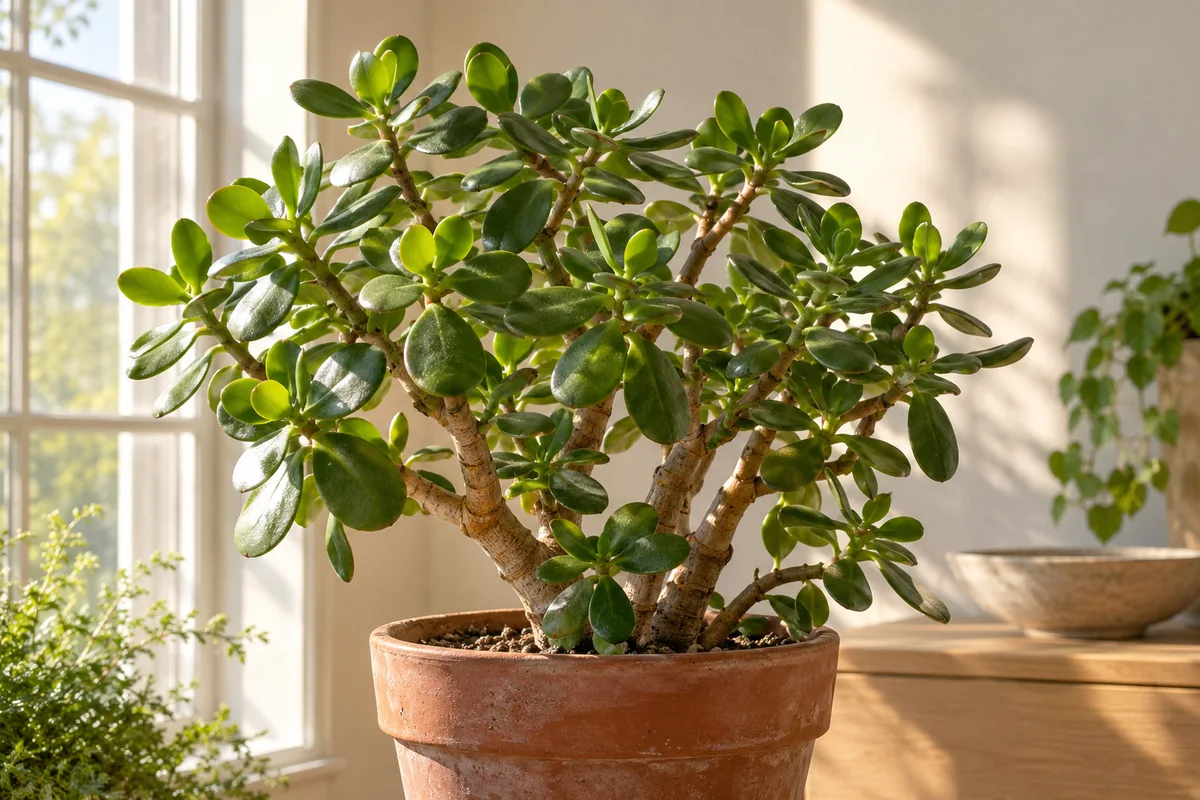
A jade plant's woody branches can make it look as though it needs a deep heavy pot, even when the root system occupies a fairly modest space. The weight above the rim and the volume below it are separate considerations. A stable container matters, yet a large amount of unused damp mix can make watering less predictable. Start by inspecting the roots and the current medium. Repotting is useful when they are crowded, the mix has lost its structure, or the container no longer supports the plant securely. A pot chosen solely to match the spread of the branches may give the roots much more space than they can use.
Plan the work for a period of active growth when possible. Let the plant reach an appropriate point in its normal drying cycle so the mix is manageable rather than sodden. Gather a drained container, a suitable succulent medium, and clean tools. Protect the fleshy leaves from pressure as you move the plant. They can detach when a branch is rested against the edge of a table or held tightly during handling. A mature specimen may need assistance so its weight is supported without bending the main trunk. Work slowly enough to keep the canopy balanced while the old pot is eased away from the roots.
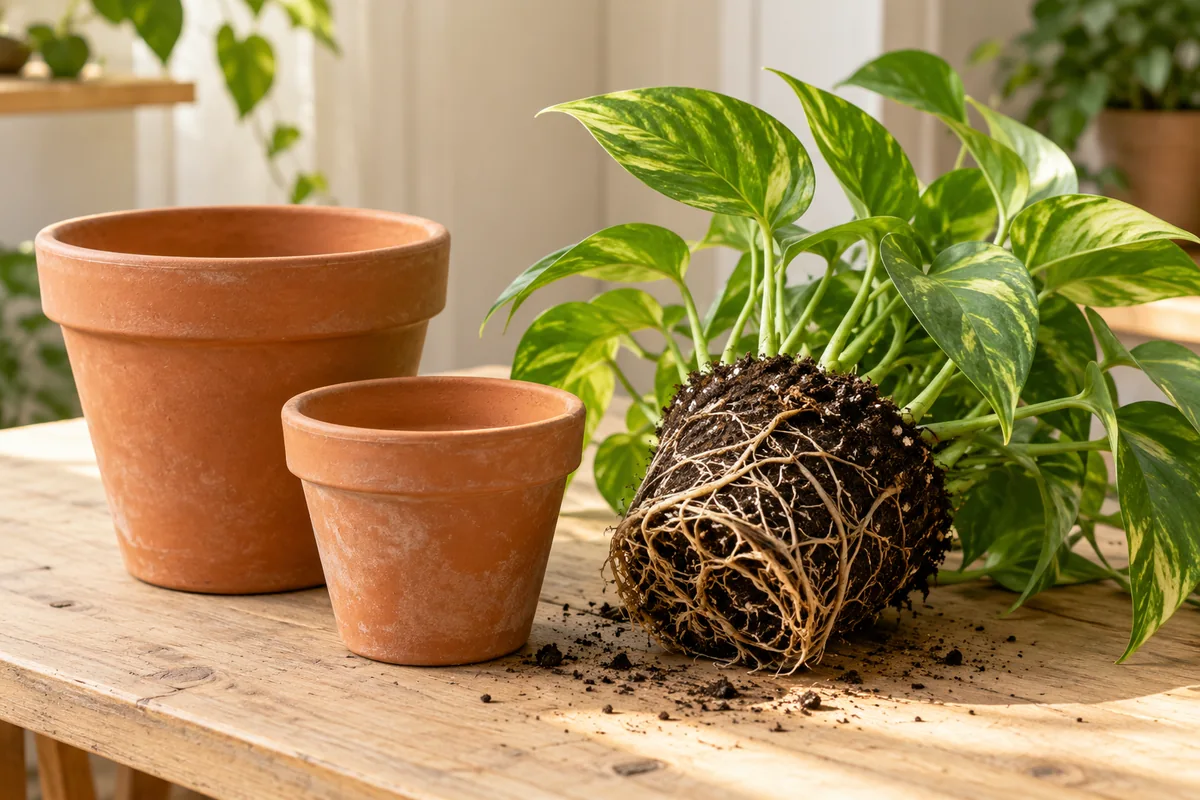
Look at the root ball before settling on the final pot. Fine roots may be concentrated around the edges, with some older mix remaining in the center. Loosen what moves readily and remove clearly deteriorated material, preserving firm roots. There is no need to wash away every particle during a routine repot. If roots have been lost, choose a container that fits the remaining system rather than using the larger pot originally planned. A jade plant with a reduced root ball should not sit in a broad reservoir of fresh moisture holding mix. The container should offer a modest amount of new growing room and stand securely beneath the plant's existing shape.
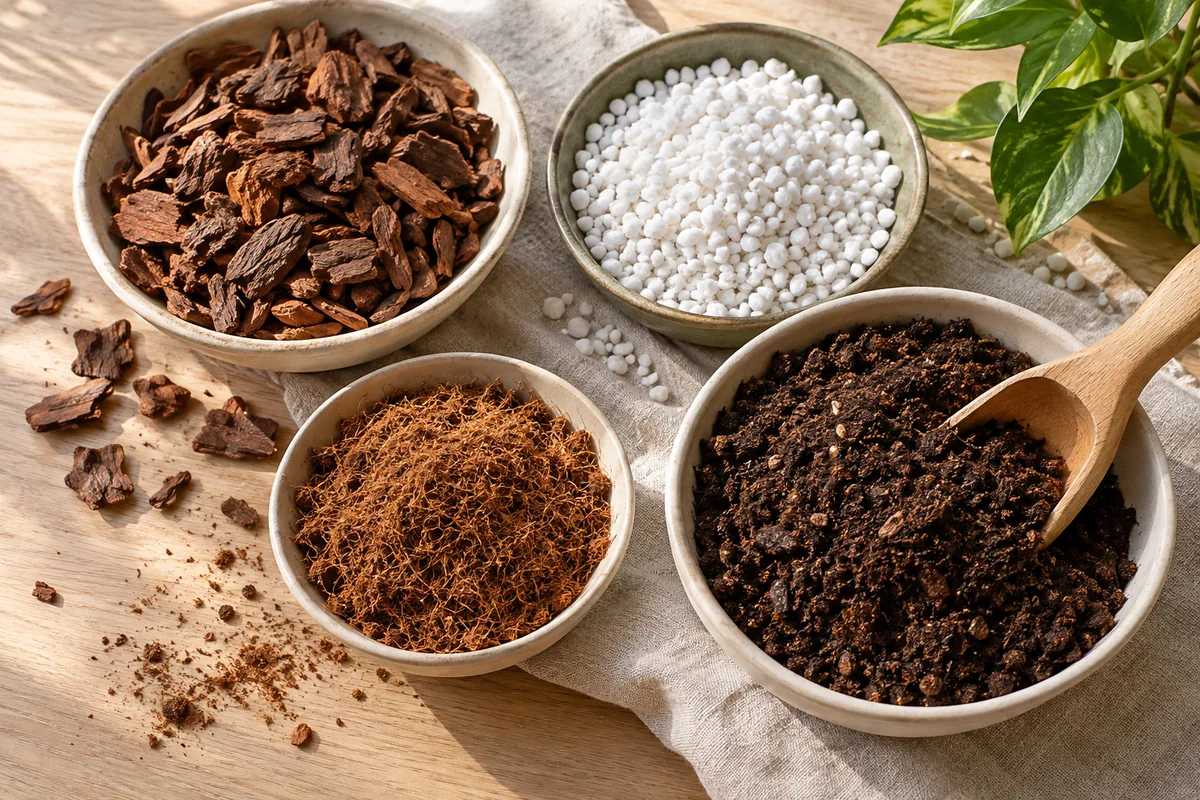
Select a growing medium that allows a suitable drying interval in your room. Succulent mixes vary considerably, so examine the ingredients and texture instead of relying only on the bag's name. Mineral particles and a well structured base can be useful, while fine dense material may remain wet too long in a cool position. Avoid using a stone layer as a substitute for appropriate mix and drainage. Fill the root zone with the selected medium throughout. Set the jade at its previous depth, keeping the trunk base from being buried. Add mix around the sides gently and leave enough space below the rim to water without overflowing.
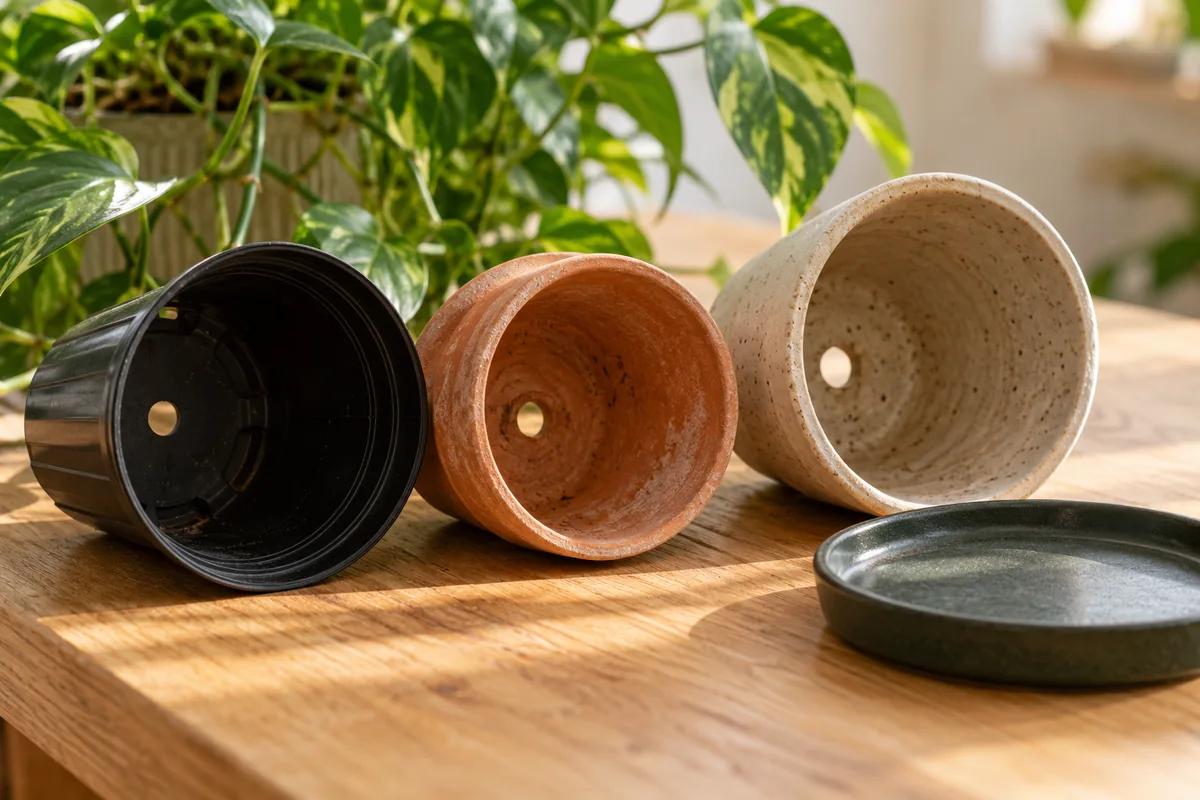
A heavy pot can improve balance without needing to be greatly oversized. Terracotta often offers useful weight and allows moisture movement through its walls, though its behavior still depends on the mix and room. A sturdy decorative cover around a suitable inner pot is another option if runoff is always removed. Do not anchor a leaning jade by burying the trunk deeply or compressing the mix hard around it. A temporary support can help while roots settle. Longer term, examine the light direction and branch balance. A plant stretching toward a distant window may need a better position as well as a stable container.
Immediate watering should reflect the amount of root disturbance. A plant with freshly cut roots or broken fleshy sections should not be placed straight into saturated conditions without allowing an appropriate settling period. Follow species specific guidance and consider room temperature, the dryness of the mix, and the extent of the cuts. When watering is appropriate, apply it thoroughly enough to moisten the root zone, then let excess leave completely. Empty the saucer or cover. The next watering should wait for the plant's suitable drying threshold, assessed below the surface where practical. A dry top layer can hide moisture around the lower roots in a deeper pot.
Keep the jade in useful light while avoiding a sudden jump into stronger sun after handling. A stable bright position supports compact new growth and helps the pot use moisture predictably. The new container may dry more slowly than the old crowded one, so inspect rather than repeating the previous interval. Learn its weight after drainage and near the next watering point. Do not fertilize immediately just to encourage a quick response to repotting, especially when the mix already contains nutrients. Let root contact and normal moisture use become established first. Old leaves that were damaged before the move are less informative than the firmness and spacing of new growth.
Once the plant settles, keep the container size and watering method working together. Watch for a stable trunk, firm leaves, and gradual new growth rather than expecting an immediate burst. If the plant remains top heavy, solve that through an appropriate support or outer container instead of repeatedly increasing the wet volume around the roots. If the mix remains damp unusually long, review light, texture, and drainage before watering again. Repotting a jade is a measured adjustment to a compact root environment. Preserving firm roots and giving them a manageable next space makes care clearer than choosing a large final pot years before the plant needs it.