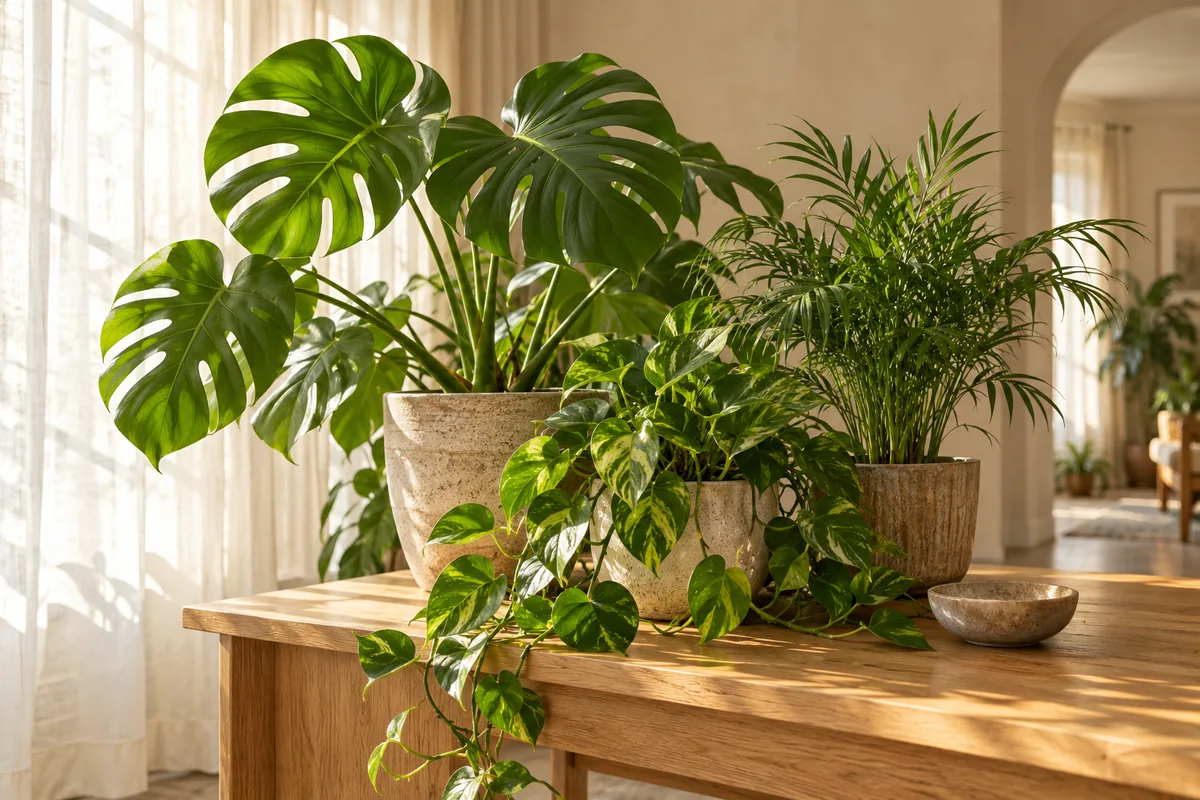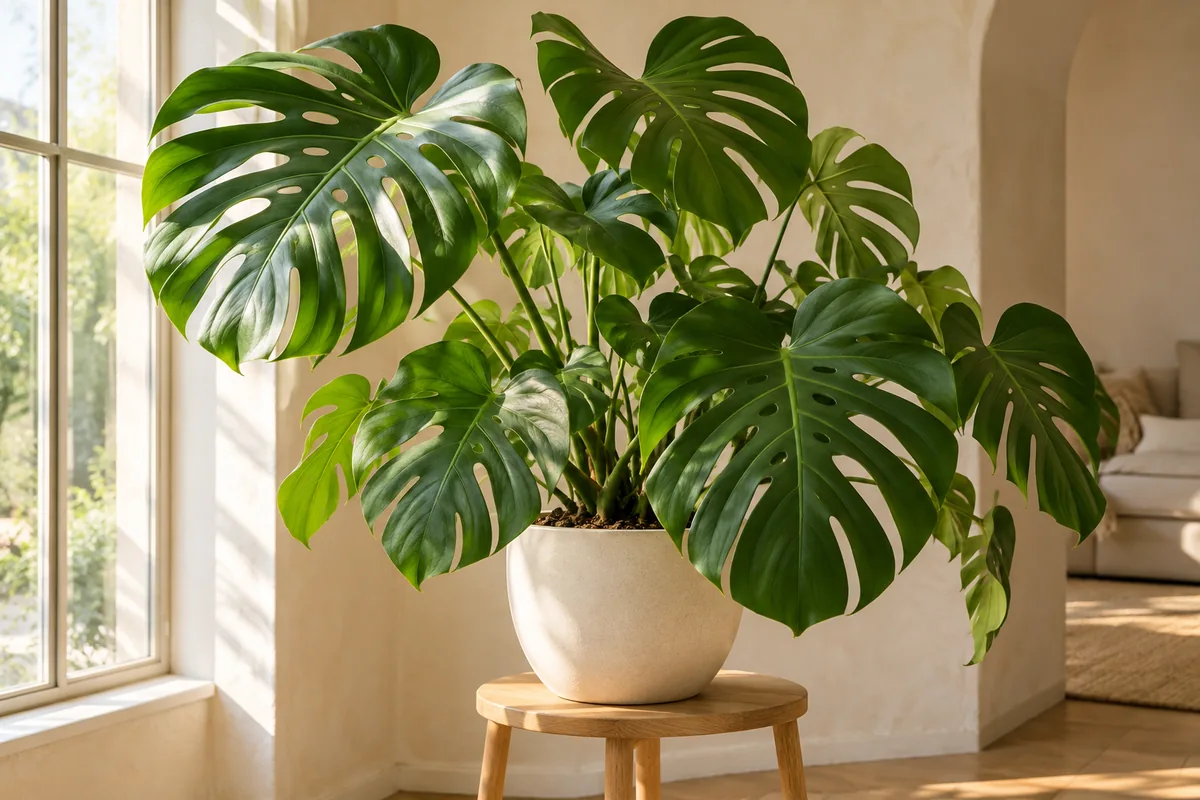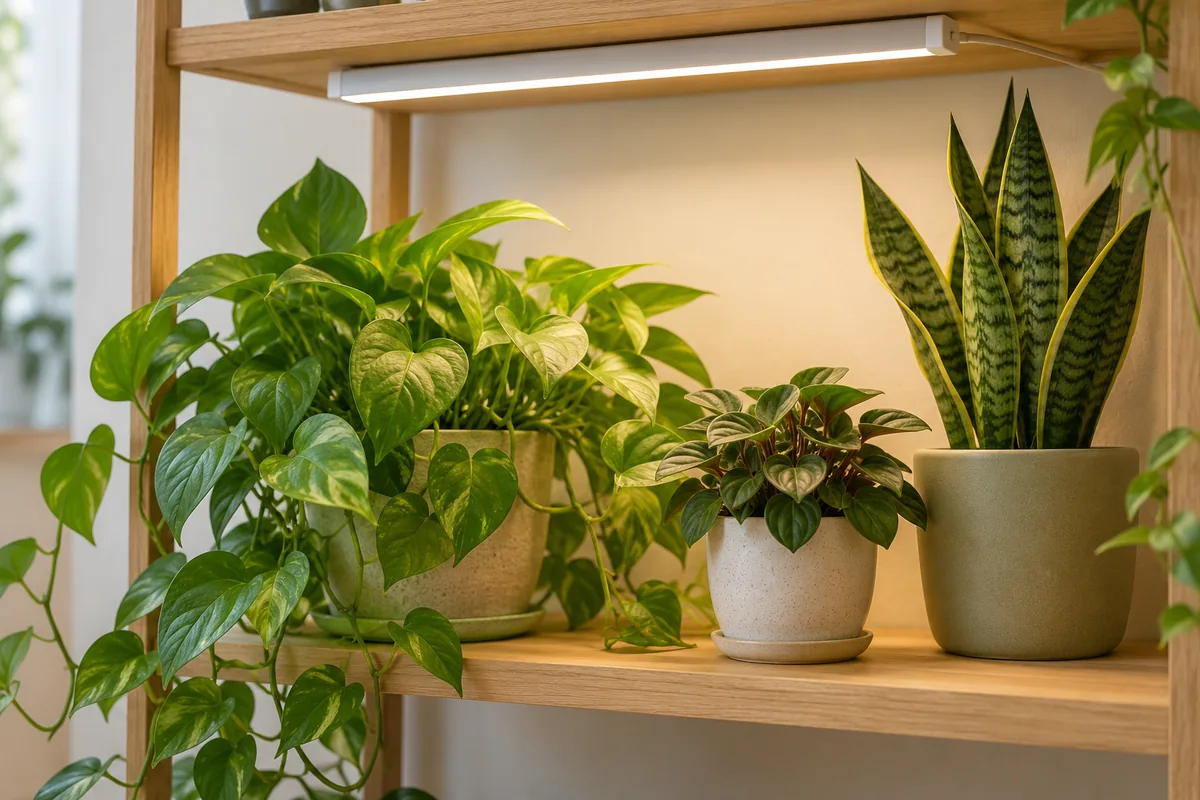
A plant shelf can become crowded gradually enough that the change is easy to miss. One vine lengthens, a fern sends out new fronds, and a broad leaf begins shading the pot behind it. Seasonal light changes can make that overlap more important. Start by looking through the arrangement at leaf level rather than judging only the front view. Can you see each growing point, reach each pot, and inspect the mix without moving half the shelf? A useful arrangement supports care as well as appearance. Rearranging it should make light and access clearer, with enough room for the next stage of growth rather than merely fitting everything back into the same outline.
Check where the light reaches the shelf through the day. The front row may receive useful brightness while the back row is shaded by foliage and the shelf above. In winter, the available daylight may be shorter or reach the room at a different angle. In summer, one edge can become much hotter than the rest. Move a decorative object or overlapping canopy before assuming the whole shelf needs a new location. Plants should be placed according to their needs, not simply sorted by pot size. A compact sun loving succulent may need a brighter position than a larger shade tolerant foliage plant, even when the opposite arrangement looks more symmetrical.
Give leaves room to unfold and dry normally after any cleaning or accidental splash. Dense overlapping foliage makes inspection harder and can hide small changes near the base. Avoid pressing a plant against a wall solely to gain space at the front. Check trailing vines where they pass behind pots or wrap around supports, freeing them gently before they become trapped. A climbing plant may need a support adjustment rather than another pot squeezed beside it. Keep the growing tip visible. When several plants have expanded at once, moving one to another suitable location can be more practical than compressing the whole group into a tighter arrangement that remains difficult to maintain.
Review watering access pot by pot. You should be able to check the mix and remove runoff without pouring blindly through neighboring leaves. Small pots at the back are easy to overwater when their condition is difficult to see. Place saucers securely and check that an outer cover can be emptied without damaging adjacent foliage. A tray used beneath several plants should not leave every pot standing in shared water after one is watered. Consider removing manageable pots to a suitable watering area, then returning them after drainage. The arrangement should make that routine simple. If it requires balancing a dripping pot over a lamp or a fragile plant, revise the layout before continuing.
Check the shelf's strength and stability as plants and containers become heavier. A watered pot weighs more than a dry one, and tall canopies can shift the balance near an edge. Use stands and shelves rated for the load and secure them according to their instructions. Keep heavy containers where they are supported properly and avoid precarious stacks used to raise a small plant toward light. Cables for grow lights should remain clear of water and not be trapped under pots. A visually open arrangement is only useful when it is physically reliable. Leave room for ordinary movement in the room so leaves and trailing stems do not catch on doors or people passing by.
Rotate suitable pots in small increments when growth leans toward the light, keeping their overall position reasonably consistent. Rotation distributes exposure without requiring a dramatic move between different rooms. Some plants respond poorly to frequent environmental changes, so observe the species and avoid rearranging everything every week. A seasonal review should solve clear issues and then allow time for the plants to respond. Mark the front of a pot discreetly if you want to track its orientation. Compare new growth rather than expecting an old bent stem to become straight immediately. Supports and future growth can improve shape gradually while the plant remains in a stable workable position.
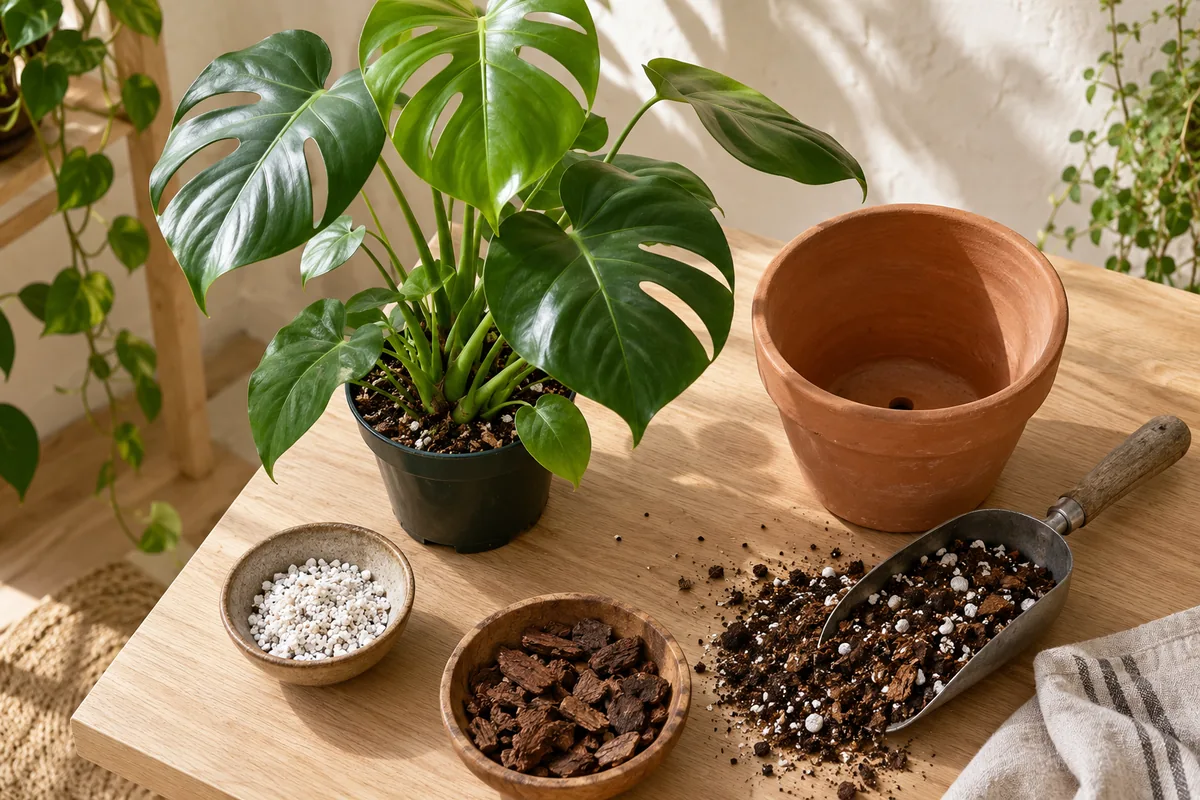
Take the opportunity to inspect pots hidden by the crowded arrangement. Remove fallen leaves, check accessible drainage holes, and note any plant whose mix stays wet much longer than its neighbors. The answer may be its shaded position rather than a need for a new fertilizer. Keep newly acquired or returning outdoor plants in a separate observation space when possible instead of fitting them immediately into close contact with the shelf. Avoid combining rearrangement with unnecessary repotting and pruning for every specimen. Each task should have its own reason. A clearer layout often resolves light and access problems without disturbing roots or removing useful foliage that simply lacked room.
Photograph the revised shelf and note which plants moved and why. Revisit the arrangement after new leaves expand and as the next seasonal light change arrives. The record helps distinguish a successful layout from one that merely looked tidy for a day. A good plant shelf leaves the plants visible as individuals, with their needs and moisture patterns easy to inspect. It does not need to be full at every level or symmetrical from every angle. Space is part of the care plan. By leaving room for leaves, light, hands, and drainage, you create an arrangement that can remain attractive because it is practical to maintain throughout the year.