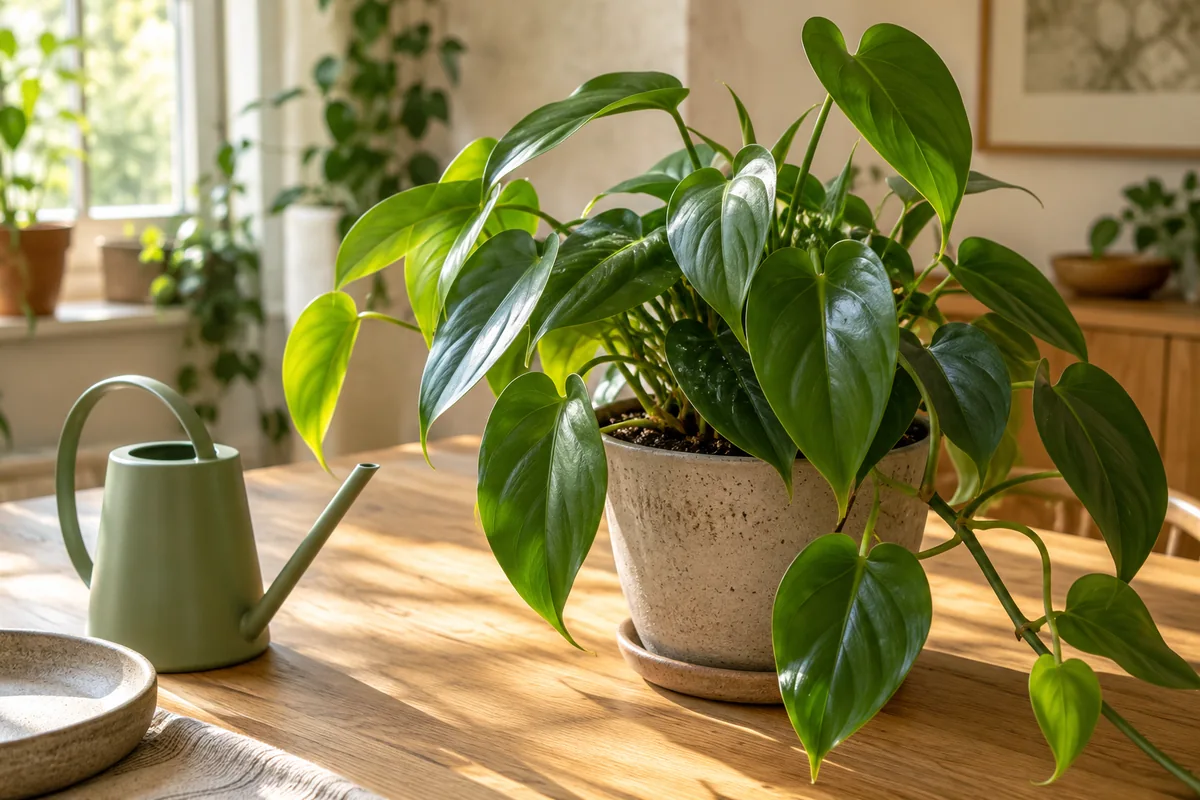
A watering can filled straight from a very cold tap can feel surprisingly chilly in winter. At the other extreme, water left in a sunlit container may become warmer than expected before it reaches the roots. Most ordinary indoor watering is simpler when the water feels mild and close to the room's temperature. There is no need to turn the task into a precise laboratory exercise for a familiar foliage plant. Avoid the extremes, check the root zone first, and use the water evenly. Temperature is one part of a sensible routine, alongside drainage, moisture timing, and the actual composition of the supply.
Roots operate in the environment created by the mix and container. Sudden very cold or hot water changes that environment abruptly, particularly in a small pot with little material to buffer the temperature. Water that is mildly cool or near room temperature is a practical choice for many houseplants. Do not use hot water in an attempt to stimulate growth, and do not add ice as a universal watering method. Ice melts unevenly and delivers a small localized amount rather than an ordinary thorough drink. The plant's species and growing method matter, so follow specific horticultural guidance where a specialist plant has unusual requirements.
If the tap runs very cold, fill the can ahead of time and leave it in a suitable indoor place until it is no longer noticeably chilled. Keep the container clean and avoid placing it beside a radiator or in intense sun. A covered vessel can help keep dust and household debris out, provided it is used appropriately. Check the water again before pouring, especially if it has been stored for a while. A simple touch comparison is adequate for routine use when extremes are avoided. The main goal is a stable root environment, not achieving a particular number that distracts from whether the plant actually needs water.
Standing water changes temperature, yet it does not reliably remove dissolved minerals. That distinction matters when brown tips or a pale crust lead someone to leave every can overnight and expect the problem to disappear. Dissolved salts remain after the water reaches room temperature. Different municipal treatments also behave differently, so standing is not a universal way to remove every substance in a supply. Check local water information when quality is a concern. Water with lower mineral content may be useful for sensitive foliage or where deposits are substantial. Choose the source for its composition and the temperature for a gentle watering session.
Avoid water that has passed through a household softening system using sodium if it adds an unsuitable salt load for plants. A separate unsoftened outlet may be available, depending on the plumbing. Do not assume a drinking water filter removes every dissolved mineral; filters have different purposes and specifications. Read what the system actually does. Collected rainwater also depends on the collection surface, container cleanliness, and local conditions. Keep the choice practical and informed rather than treating any source as automatically ideal. For ordinary plants, an appropriate supply used with good drainage is more useful than an elaborate storage routine built around an incorrect assumption.
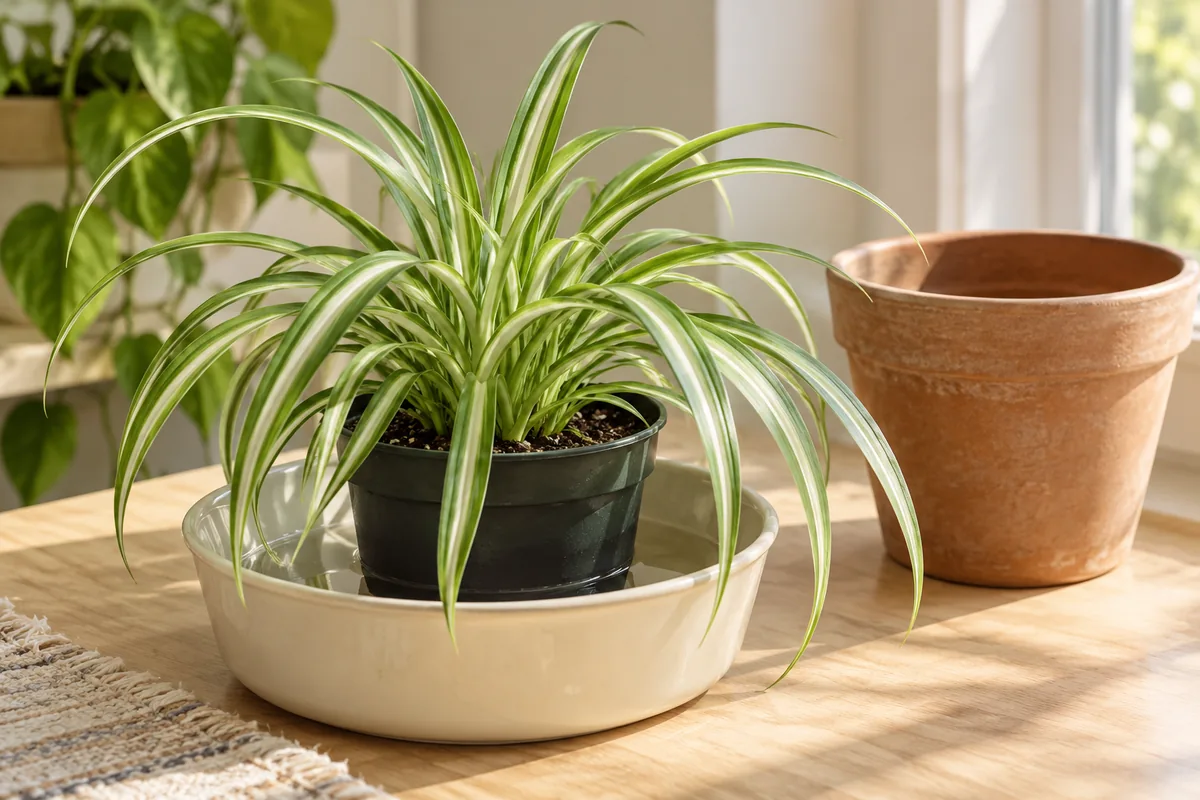
Check moisture before using the prepared water. A can at a comfortable temperature does not make a wet pot ready for another drink. Feel beneath the surface, use a probe, or compare the pot's weight with its familiar dry state. Water a fern according to its need for gentle consistent moisture and a succulent according to its need for more substantial drying. Pour slowly across the mix, keeping sensitive crowns clear, and let excess drain. Empty the saucer or outer planter afterward. Those steps prevent the temperature discussion from obscuring the more common problem of roots remaining surrounded by water for too long.
During colder months, the room and container may also be cooler, particularly near glass or on a cold floor. Move tropical plants away from cold drafts and avoid leaving them pressed against windows. Mild water cannot compensate for a pot that spends every night in an unsuitable temperature. Light may be weaker too, slowing water use and extending the interval between drinks. Review the whole setting when growth pauses. Do not respond with warmer water, stronger fertilizer, or repeated extra watering in an attempt to force activity. A stable suitable position and careful moisture checks usually provide a clearer route through a quieter season.
Keep the can clean, choose a suitable source, and use water that feels mild rather than extreme. That is enough temperature planning for many ordinary houseplants. If a plant develops persistent marks, review the root moisture, drainage, light, mineral buildup, and species needs together instead of attributing everything to one chilly watering. New growth and a predictable drying pattern provide the most useful feedback. A comfortable water temperature supports a steady routine, yet it works as part of the whole arrangement. The roots benefit most when the right amount reaches the whole pot at the right time and the excess can leave freely afterward.