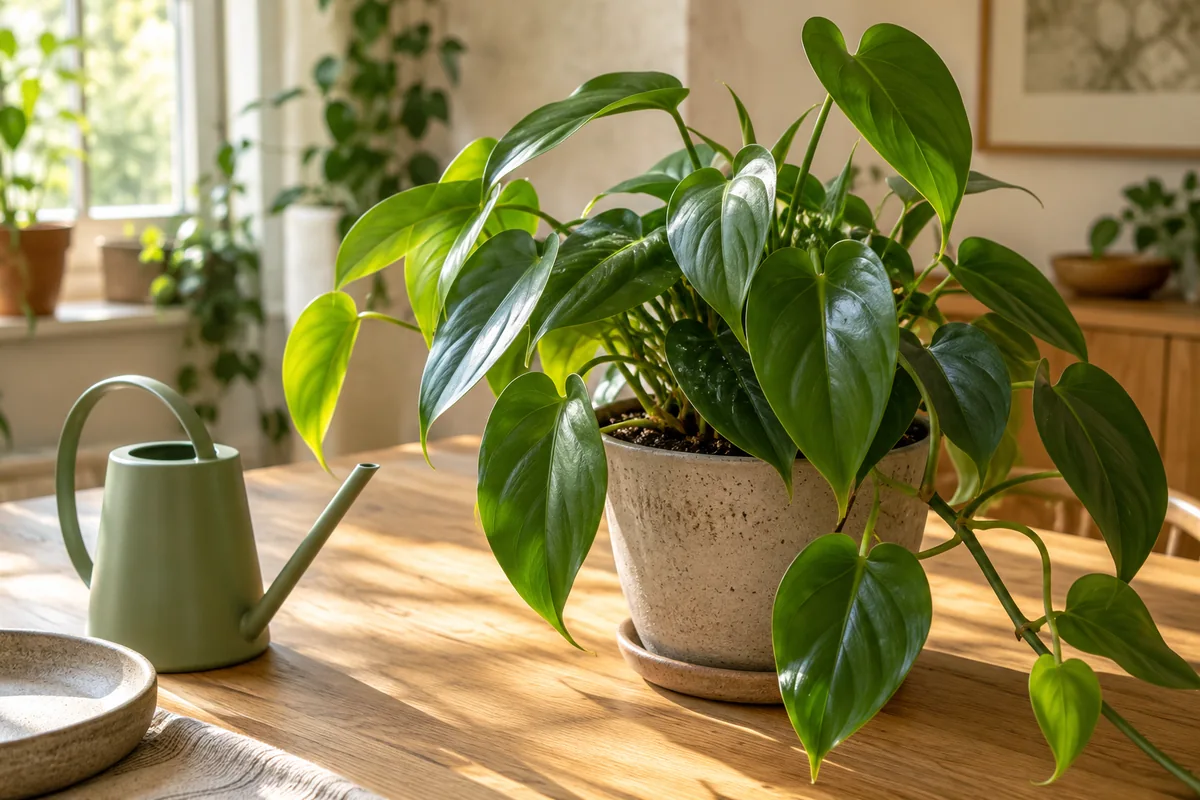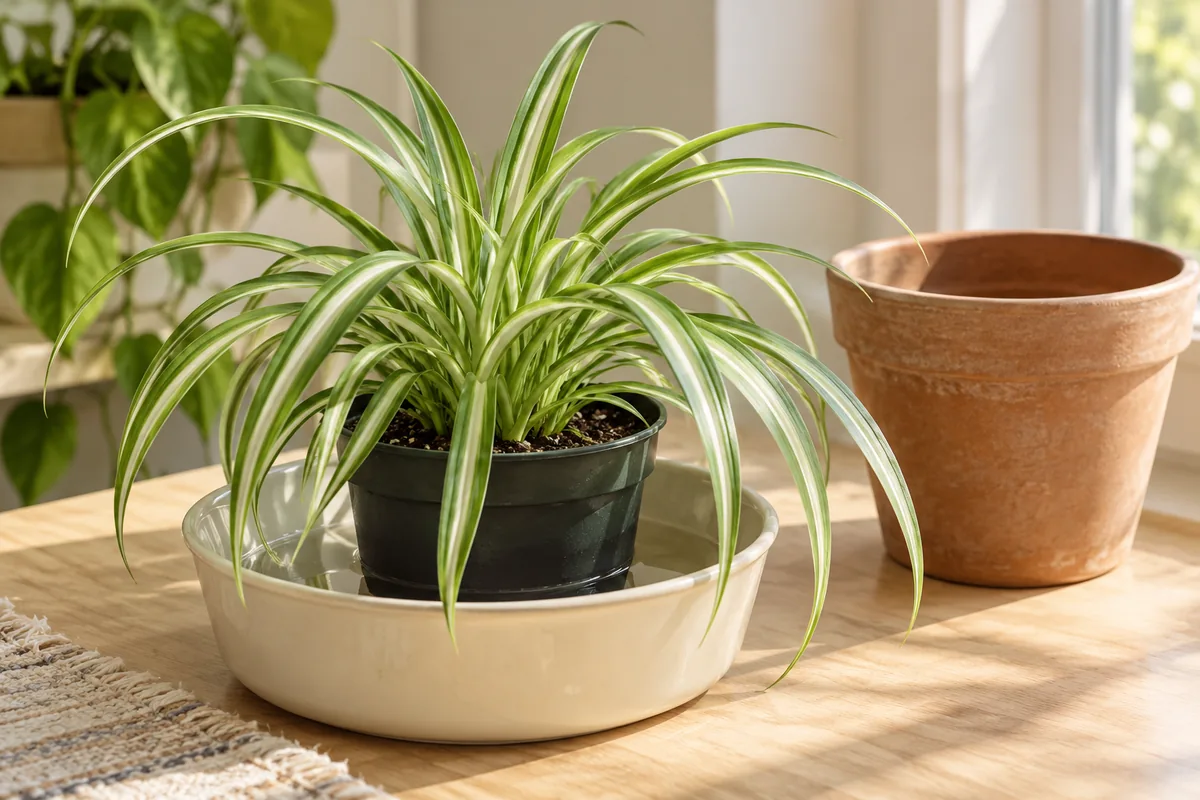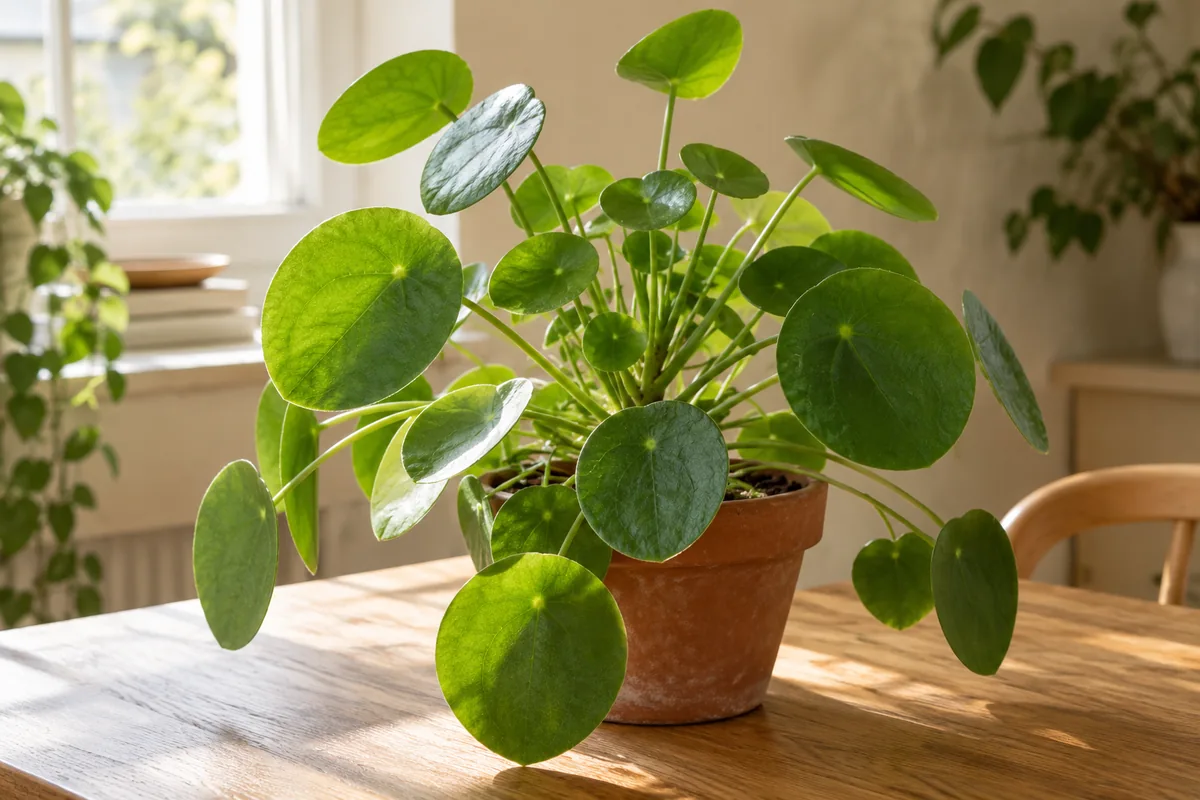
A bright window can be exactly the right place for a plant until a sharp afternoon beam reaches the leaves. A sheer curtain offers a simple way to soften that exposure without moving the whole arrangement across the room. Its effect depends on the fabric, the distance from the glass, and the light available outside. A pale lightweight curtain does not behave like a dense lined panel. Treat the curtain as part of the growing environment and observe what it changes. The aim is useful filtered daylight for the plant, not merely a softer looking room or a permanent barrier placed between every leaf and the sun.
Start by identifying the plant's needs. Many tropical foliage plants appreciate bright indirect light and can be marked by sudden intense sun, especially if they developed in shade. A sun loving succulent may need more direct exposure and can become stretched behind a dense curtain in a weak window. The same fabric is therefore not appropriate for every pot. Observe direct sun hours at the proposed position and consider outdoor shade. A south or west window in the Northern Hemisphere may offer strong exposure, yet a porch or neighboring building can reduce it enough that further filtering is unnecessary.
Choose a curtain that allows substantial daylight through and covers the part of the window where the strongest beam reaches the foliage. Notice the pattern on the wall or floor with the curtain closed. A softer patch of light suggests diffusion, while a very dark room indicates that too much may be blocked. You do not need to turn this into a precision experiment to make a practical choice. Compare the window at the same time on similar days and watch how the plant's newest leaves develop. The fabric's appearance in a shop is less useful than its actual effect in the room.
Keep leaves from pressing against the curtain or the glass. Fabric that moves whenever a window opens can rub tender new growth and leave creases. A curtain resting on damp foliage may remain wet in places and make inspection difficult. Leave a small clear gap around the plant, and check that the pot can still be reached for watering and drainage. If the window is opened regularly, consider cold drafts and strong airflow as well as light. A curtain can soften a beam without protecting a tropical plant from a sudden drop in temperature beside an open winter window.
Introduce changes gradually when the plant has been growing under very different conditions. Moving a shade grown specimen directly to a sunny window behind a thin sheer may still increase exposure substantially. Begin with shorter periods or a slightly sheltered position and observe for several weeks. Leaves that develop dry pale patches after a move may have received more intense light than they could tolerate. Existing marks will remain. Judge the next leaves and whether new damage stops. Avoid compensating with constant extra water, since a wet root ball does not prevent every form of sun marking and can create an additional problem.
The curtain's daily use matters. A plant behind a sheer all day receives a different light pattern from one exposed to direct morning sun before the curtain closes. Heavy drapes left closed over the sheer can remove most of the useful daylight. Base the arrangement on ordinary household habits. If privacy requires the window to stay covered, choose a plant suited to the resulting light or consider a suitable supplemental source. Do not evaluate the position only during a rare afternoon when every covering is open. The leaves respond to the repeated daily environment rather than the brightest moment you happen to notice.
Review watering after filtering the light. A plant that receives less intense exposure may use water more slowly, particularly in a cool room. Check beneath the mix surface and let the plant's requirements guide the next drink. Keep the drainage arrangement clear and empty collected water as usual. Seasonal changes may require another review: summer foliage on outdoor trees can add shade, while winter sun may enter farther into the room for fewer hours. Clean the window and wash the curtain according to its care instructions when dust becomes visible. Those ordinary details can alter the light without any change in the plant's position.
Watch the newest growth for a useful balance of leaf size, spacing, and firmness. Long thin stems may indicate that the filtered position has become too dim, while repeated dry patches on the exposed side suggest a need to soften or reduce strong sun. Adjust one element at a time so the response remains understandable. A sheer curtain is a flexible household tool rather than a universal plant requirement. Used thoughtfully, it can turn an awkward bright window into a comfortable place for broad foliage, with enough daylight for growth and enough protection for leaves that developed under gentler conditions. Keep the fabric arrangement simple enough that ordinary household use does not repeatedly hide the plant behind heavier closed panels.