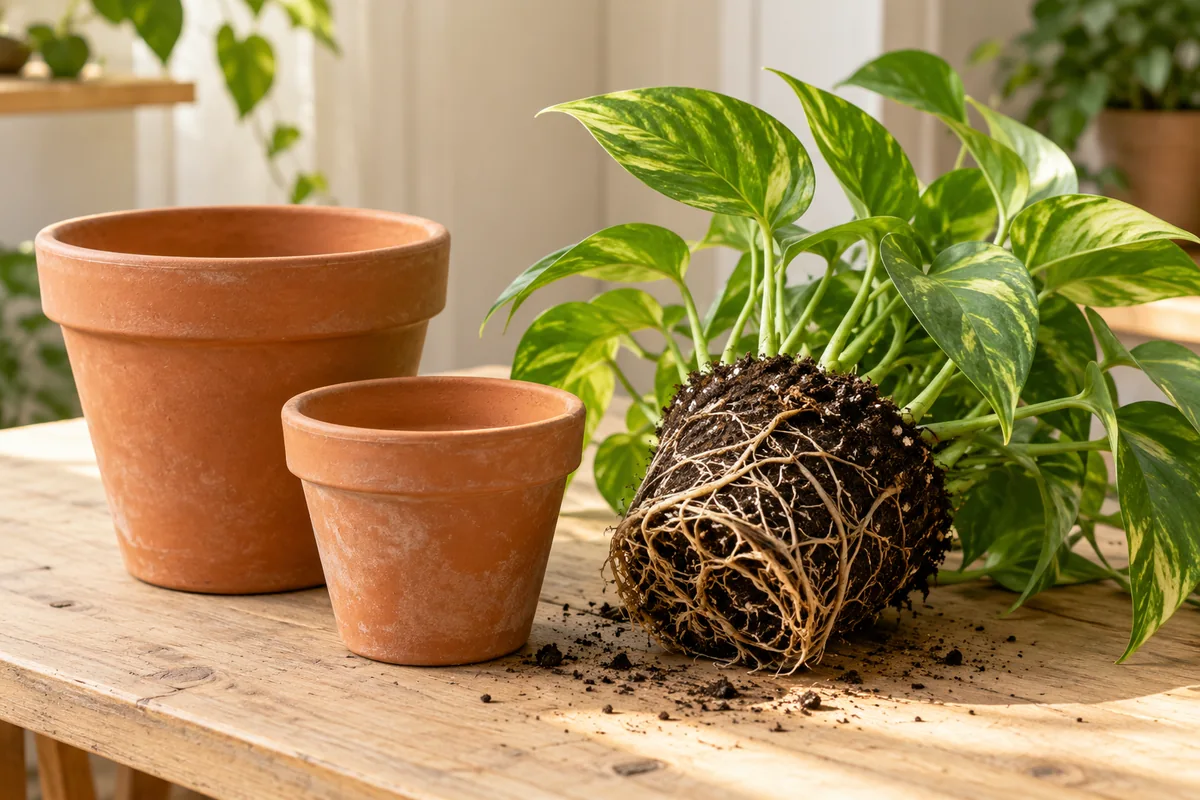
An old root ball can emerge from its pot as a hard cylinder, with the growing mix holding the exact shape of the container. That firmness may come from dense roots, compacted material, or a combination of both. Before breaking it apart, take a moment to understand what you are handling. Roots that fill the pot need different treatment from a small root system trapped in a heavy compact mass. The purpose of removing old mix is to improve the growing environment while preserving useful roots. Turning every repot into a complete bare root operation can create more disruption than the plant needs.
Inspect the outside first. Look for firm roots, dense circling sections, loose depleted material, and areas that remain unusually wet. A root ball that is slightly moist at an appropriate point in the watering cycle is often easier to handle than one that is sodden or severely dried. Support the plant by its root mass and base rather than pulling on the canopy. Work over a tray with clean tools available. If the mix falls away readily, remove that loose portion without forcing deeper layers apart. You may find that a modest refresh around the outside is sufficient when the roots and central material remain in good condition.
Use your fingers or a small blunt tool to ease accessible outer material gently. Work from the edges in short sections rather than driving a sharp object straight through the center. Stop where firm roots resist. Fine roots can be difficult to distinguish from fibers in the mix, so slow work in good light helps. A wooden skewer can loosen a small pocket without the force of a metal fork, yet any tool can damage roots if used aggressively. Keep the goal specific: open a crowded edge, remove a clearly unsuitable patch, or create better contact with fresh medium. There is no need to make the whole root system visually perfect.
Dry shrunken mix may have pulled away from the pot wall and become difficult to rewet. In that case, an appropriate controlled moistening before the work can make the material more manageable. Do not leave every plant soaking indefinitely as a universal preparation. Succulents and plants with deteriorated roots need particular caution around extra moisture. A brief supervised approach suited to the species is different from abandoning a root ball in a bucket overnight. If the center remains hard and dry, assess whether careful gradual loosening or a change in watering technique can address it without stripping all the roots. The least disruptive effective approach is often the most practical.
Very wet compacted material calls for a different assessment. Check drainage, container size, and the condition of the roots. Soft collapsing roots or an unpleasant odor may indicate that more than ordinary repotting is needed. Remove clearly deteriorated material with clean tools while preserving firm roots, and choose the new container according to the root system that remains. A smaller plant after root loss should not automatically receive a larger pot. Fresh mix should provide suitable structure and moisture behavior rather than merely surrounding the old wet mass with a new outer layer. Consider the whole root environment, including the light and temperature where the plant will return.
Rinsing can reveal roots in some situations, but it also removes the protective contact of existing mix and adds handling. Reserve it for a clear reason rather than making it routine. Use an appropriate gentle method if needed, protect the roots from extreme water temperatures, and avoid scrubbing. Do not leave exposed roots drying while you prepare the next step. Have the selected pot and medium ready. Plants differ in their tolerance of root disturbance, and a recently purchased specimen may already be adjusting to a new room. Optional extensive root cleaning can often wait until there is evidence that the existing material is causing a genuine problem.
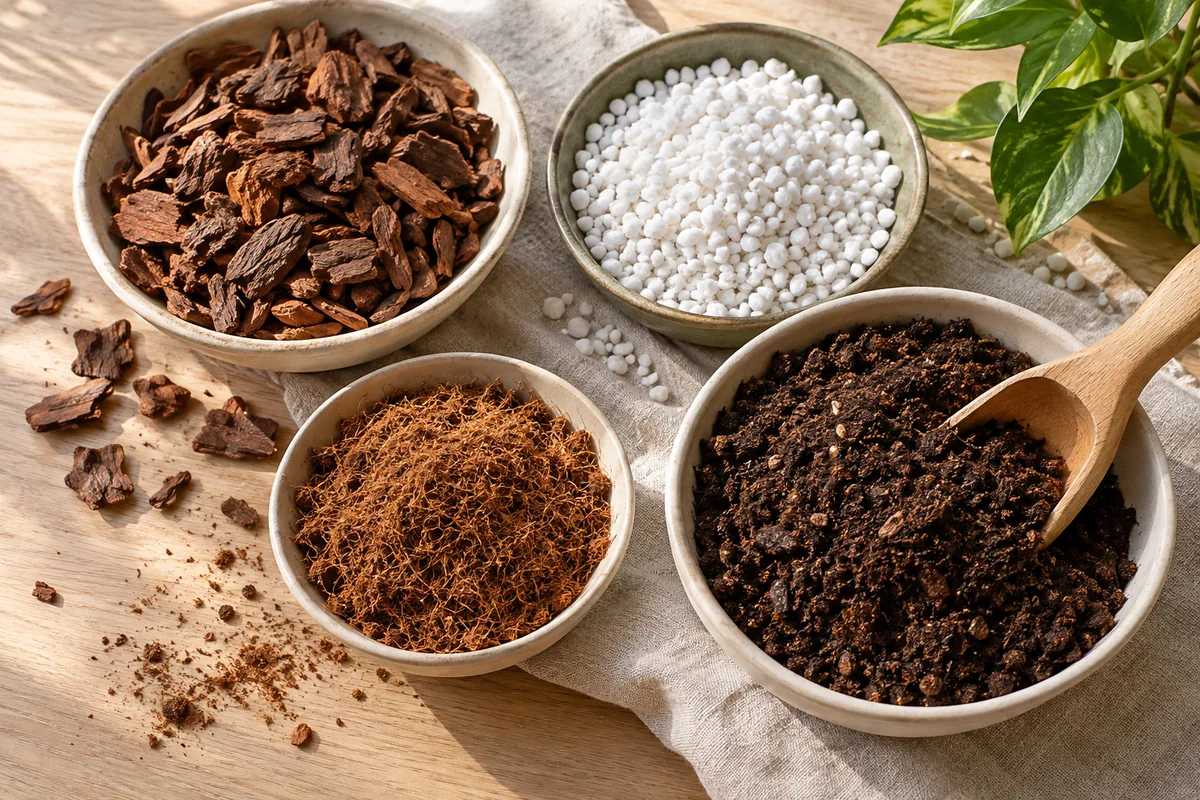
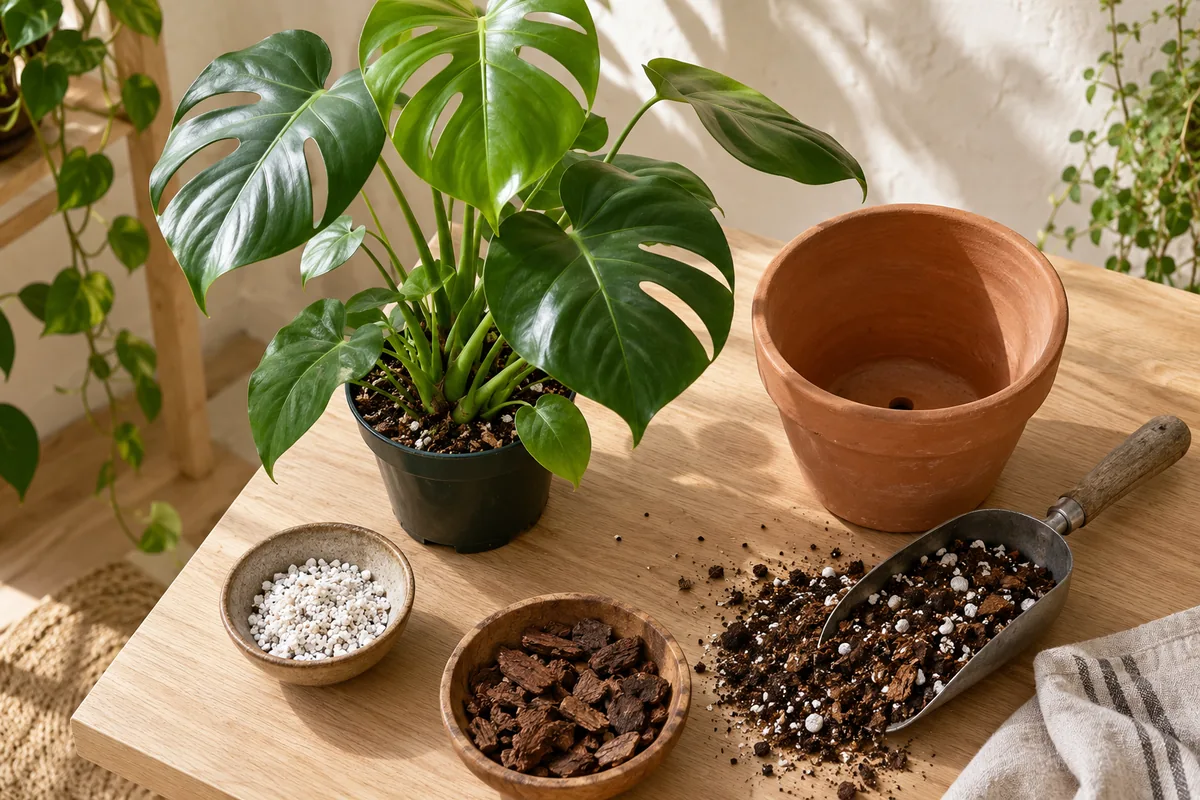
Set the plant at its previous depth and work fresh prepared medium around the remaining roots. Avoid broad empty spaces between a firm old core and loose new mix. Settle gently without packing hard, keeping drainage open and the container proportionate. After an appropriate first watering, watch how the old and new areas dry. They may retain moisture differently for a time. Check the center where practical and learn the new container weight after drainage. A dry outer ring does not always mean the core needs water. Repeatedly unpotting the plant to inspect progress is less useful than observing a few normal watering cycles in stable conditions.
Over the following weeks, evaluate new growth and moisture use rather than the appearance of old damaged leaves. Keep light and temperature suitable, delay unnecessary feeding while roots settle, and avoid adding other major changes at the same time. Record what you removed and which fresh mix replaced it. If the plant establishes well, that information can guide the next repotting decision. Gentle removal of compacted material is successful when it improves root contact and drying behavior with limited disruption. The aim is a functioning root zone, not a completely bare specimen on the workbench or an immediate transformation above the rim the day after repotting.